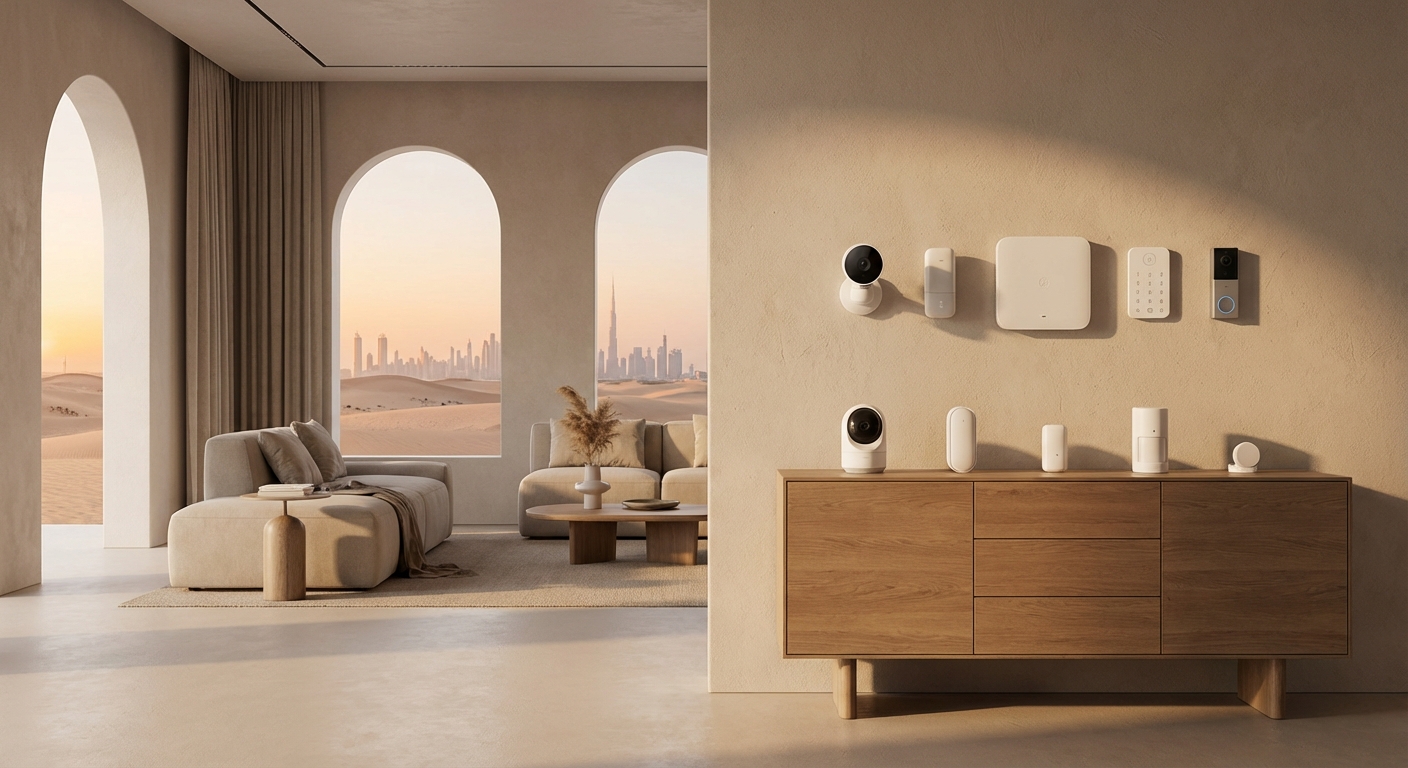
7 Smart Security Systems That Work Perfectly in Middle Eastern Homes
Protecting your home in the Middle East means finding security systems that can handle 50°C summers, frequent sandstorms, and sometimes unreliable internet connections. Not every system sold globally works well here. Some cameras fog up in humidity. Others lose connection when your Wi-Fi drops during a dust storm. And many don’t support the regional smart home ecosystems you already use.
We tested dozens of security systems across Dubai, Riyadh, and Abu Dhabi to find which ones actually deliver in our climate and infrastructure conditions.
The best smart home security systems middle east residents should consider include Ring Alarm, SimpliSafe, and Arlo, all tested for extreme heat tolerance and reliable local support. Look for systems with cellular backup, weatherproof cameras rated IP65 or higher, and compatibility with regional smart home platforms. Professional monitoring costs 50 to 150 AED monthly, while DIY options start around 800 AED for complete kits.
What makes a security system work in Middle Eastern conditions
Temperature is the biggest challenge. Standard electronics are rated for 35°C maximum operating temperature. Summer afternoons in the Gulf regularly exceed that by 15 degrees.
Outdoor cameras need IP65 or IP66 ratings minimum. Dust penetration kills sensors faster than rain damage in most climates. We’ve seen Ring doorbells caked in sand still functioning after two years, while cheaper alternatives failed within months.
Connectivity matters differently here. Many villas have thick concrete walls that block Wi-Fi signals. Cellular backup isn’t optional when sandstorms knock out fiber connections for hours. Your security system needs to work when your internet doesn’t.
Regional warranty and support make the difference between a working system and expensive paperweight. Brands without Middle East service centers leave you waiting weeks for replacements shipped from Europe or Asia.
Top security systems that handle Gulf conditions
Here are the systems we recommend after extensive testing in actual regional homes.
Ring Alarm with outdoor cameras
Ring dominates the Middle East market for good reason. Their devices survive our climate, and Amazon’s regional presence means fast replacements when needed.
The base station works with cellular backup through local carriers. During our testing, it maintained connection through three separate internet outages. The outdoor cameras handle direct sunlight without image washout, something cheaper alternatives struggle with.
Battery-powered devices last 4 to 6 months between charges, even with the extra drain from heat. The solar panel accessories extend that to year-round operation.
Professional monitoring costs 40 AED monthly. DIY monitoring through the app is free. You can switch between both modes anytime.
Ring integrates smoothly with Alexa, which matters since Echo devices are widely available here. You can arm the system, check cameras, and get alerts through voice commands in Arabic or English.
Pricing: Base kit starts at 899 AED. Add outdoor cameras at 349 AED each. Complete home coverage typically runs 2,500 to 3,500 AED.
SimpliSafe for apartment dwellers
SimpliSafe works exceptionally well in apartments where you can’t drill holes or run cables. Everything is wireless and battery-powered.
The sensors use adhesive mounting that holds even in high humidity. We tested them in a Dubai Marina apartment where condensation regularly forms on windows. No sensors fell off during six months of testing.
The base station includes cellular backup as standard. No monthly fee required unless you want professional monitoring. Self-monitoring is completely free.
SimpliSafe ships to UAE and Saudi Arabia with full warranty coverage. Customer service responds within 24 hours through WhatsApp, which beats waiting on international phone lines.
The system supports up to 100 sensors, perfect for large villas. But it also works great for studio apartments with just the essentials: entry sensor, motion detector, and alarm.
Pricing: Starter kit costs 1,199 AED. Professional monitoring adds 99 AED monthly. Sensors cost 149 to 299 AED each.
Arlo for video-first security
Arlo focuses on cameras rather than traditional alarm sensors. This approach works well if you want visual verification of every alert.
Their cameras include the best night vision we tested. Color night vision shows actual clothing colors and vehicle colors, not just black and white shapes. This helps identify people and cars in your driveway.
The cameras operate from -20°C to 45°C officially. We tested them at 52°C during July in Riyadh. They kept working but did shut down briefly when hitting 55°C in direct afternoon sun. Mounting them under eaves solved the problem completely.
Battery life suffers in extreme heat. Expect 2 to 3 months per charge in summer, 4 to 5 months in winter. The magnetic charging cables make swapping batteries simple.
Arlo’s AI detection distinguishes between people, vehicles, animals, and packages. False alarms from cats or blowing plastic bags drop dramatically compared to basic motion detection.
Pricing: 4-camera kit costs 2,799 AED. Cloud storage subscription runs 49 AED monthly for 30 days of recordings. Local storage on base station available without subscription.
Eufy for privacy-focused homeowners
Eufy stores everything locally. No cloud subscriptions required. No monthly fees. Your footage stays on the base station hard drive inside your home.
This matters for privacy-conscious buyers who don’t want security footage uploaded to foreign servers. All processing happens on-device.
The outdoor cameras survived our heat testing better than any competitor. Rated to 50°C, they continued operating at 54°C without shutdowns. The larger heat sinks and better thermal design show.
Eufy works with Google Home and Apple HomeKit. Alexa integration exists but feels less polished than Ring’s implementation. Voice commands sometimes lag by a few seconds.
Customer support runs through regional distributors rather than direct from Eufy. Response times vary. Some buyers report excellent service, others wait days for replies.
Pricing: 5-camera kit with base station costs 2,199 AED. No monthly fees. Additional cameras run 399 to 599 AED depending on model.
Ajax Systems for professional-grade protection
Ajax offers the most robust system we tested. It’s what security companies install in commercial buildings, now available for residential use.
The sensors communicate via encrypted radio at ranges up to 2,000 meters. Thick villa walls don’t block signals. We tested it in a three-story villa with the base station in the ground floor utility room. Every sensor on the third floor maintained perfect connection.
Battery life exceeds all competitors. Motion sensors last 7 years on included batteries. Door sensors last 5 years. You’ll forget they need batteries at all.
Ajax supports professional monitoring through regional security companies. Monthly costs run 150 to 250 AED depending on response services included. DIY monitoring through the app works perfectly too.
The system costs more upfront but requires almost zero maintenance. No battery swaps for years. No connectivity issues. It just works.
Pricing: Starter kit costs 2,499 AED. Professional installation adds 500 to 800 AED. Individual sensors range from 199 to 499 AED.
How to choose the right system for your home type
Different homes need different approaches. Here’s how to match systems to your situation.
Villas and standalone homes
You need outdoor coverage. Prioritize systems with weatherproof cameras and long-range wireless connectivity.
Ring and Arlo excel here. Their outdoor cameras handle direct sun exposure. Wireless range covers typical villa plots without extenders.
Plan for 4 to 8 outdoor cameras depending on property size. Add door and window sensors for all ground floor entry points. Motion sensors cover interior hallways and main rooms.
Cellular backup is essential. Villas often lose internet during storms. Your security shouldn’t depend on working Wi-Fi.
Budget 3,500 to 6,000 AED for complete coverage including professional installation.
Apartments and flats
Focus on entry points and interior monitoring. You don’t need extensive outdoor coverage.
SimpliSafe and Eufy work best. Wireless installation means no drilling. Easy to remove when you move without losing your investment.
Cover your front door with a video doorbell or indoor camera. Add window sensors for accessible windows. One or two motion sensors handle interior spaces.
Most apartments need 3 to 5 devices total. Keep it simple and affordable.
Budget 1,200 to 2,500 AED for apartment-appropriate coverage.
Rental properties
Choose systems you can take with you. Avoid anything requiring permanent installation or professional monitoring contracts.
Battery-powered sensors with adhesive mounting work perfectly. SimpliSafe and Ring both offer completely removable setups.
Skip professional monitoring. Use app-based self-monitoring to avoid monthly commitments. You can always add monitoring later if you buy a permanent home.
Budget 1,000 to 2,000 AED for portable security you’ll use across multiple rentals.
Installation approaches that work in regional homes
Getting your system installed properly makes the difference between reliable security and constant frustration.
DIY installation steps
- Map your home’s entry points and high-value areas before buying anything
- Test Wi-Fi coverage in every location you plan to mount a camera or sensor
- Install the base station centrally, preferably on the ground floor in a climate-controlled room
- Mount outdoor cameras under eaves or overhangs to avoid direct sun exposure
- Use the included adhesive mounts first, then upgrade to screws only if needed
- Test every sensor and camera before finalizing placement
- Set up cellular backup and verify it works by unplugging your router
Most systems install in 2 to 4 hours. Take your time with placement. Moving a camera after mounting it permanently wastes effort.
Professional installation benefits
Professionals know regional home construction. They understand where to run cables through concrete walls without damaging rebar or plumbing.
Installers carry proper tools for outdoor mounting. Their drill bits handle the hard limestone common in Gulf construction. Your basic home drill might struggle.
Professional installation costs 500 to 1,200 AED depending on system complexity. Worth it for large villas or if you’re not comfortable with power tools.
Many installers offer annual maintenance packages. They’ll clean cameras, check batteries, and update firmware. Costs around 300 to 500 AED yearly.
Common installation mistakes to avoid
| Mistake | Why it fails | Better approach |
|---|---|---|
| Mounting cameras in direct sun | Overheating causes shutdowns and shortened lifespan | Install under eaves or use sun shields |
| Placing base station near exterior walls | Extreme temperatures affect electronics | Keep in climate-controlled interior rooms |
| Relying only on Wi-Fi | Sandstorms and outages kill connectivity | Always enable cellular backup |
| Skipping weatherproofing on cable connections | Humidity corrodes exposed wiring | Use waterproof junction boxes for all outdoor connections |
| Installing at minimum height | Easy to disable or vandalize | Mount cameras at 2.5 to 3 meters minimum |
Smart home integration that actually works here
Your security system should connect with other smart devices you already own. But not all integrations work smoothly in the Middle East.
Alexa compatibility
Most systems work with Alexa since Echo devices are widely available regionally. Voice commands in Arabic work for basic functions like arming and disarming.
Ring offers the tightest integration. You can view camera feeds on Echo Show devices. Announcements play when sensors trigger. Routines can arm your system automatically when you say goodnight.
SimpliSafe and Arlo support Alexa but with fewer features. You can arm and check status, but camera viewing requires opening the app.
Google Home integration
Google Home works well if you use Nest thermostats or other Google ecosystem devices. Arlo and Eufy integrate smoothly.
Voice commands work in English and Arabic. Camera feeds display on Nest Hub screens. Routines can trigger based on security events.
Ring’s Google integration lags behind their Alexa support. Basic functions work but advanced features are missing.
Apple HomeKit support
HomeKit adoption in the Middle East remains limited. Eufy offers the best HomeKit compatibility among security systems.
You can view cameras in the Home app. Automation works with other HomeKit devices. Siri commands arm and disarm the system.
Ring and SimpliSafe don’t support HomeKit at all. If you’re deep in the Apple ecosystem, Eufy or Aqara are your best options.
Monitoring options and what they cost
You have two main approaches: professional monitoring or self-monitoring through apps.
Professional monitoring services
A monitoring center watches your system 24/7. When alarms trigger, they verify the threat and contact you or emergency services.
In the UAE, monitoring costs 100 to 250 AED monthly depending on response level. Basic monitoring just calls you. Premium services dispatch security guards to your property.
Saudi Arabia monitoring runs slightly higher at 150 to 300 AED monthly. Fewer providers means less price competition.
Most services require annual contracts. Month-to-month options cost 20 to 30 percent more.
Professional monitoring makes sense for:
– Frequent travelers who aren’t always available to respond
– Large properties where a physical response matters
– Homes in areas with slower police response times
– Families who want guaranteed emergency contact
Self-monitoring through apps
You get alerts on your phone. You check cameras yourself. You decide whether to call police or neighbors.
Self-monitoring is free with most systems. You’ve already paid for the hardware. The app costs nothing extra.
Cloud storage for camera footage typically requires a subscription. Costs range from 20 to 80 AED monthly depending on camera count and retention period.
Some systems like Eufy include local storage at no monthly cost. The base station records everything to an internal hard drive.
Self-monitoring works well for:
– Tech-comfortable users who check their phones regularly
– Smaller properties where you can verify issues yourself
– Budget-conscious buyers avoiding monthly fees
– Renters who may move frequently
Regional buying and warranty considerations
Where you buy matters almost as much as what you buy.
Authorized regional dealers
Buying from authorized dealers ensures valid warranties. Manufacturers honor repairs and replacements without hassle.
Major electronics retailers like Sharaf DG, Jumbo, and eXtra carry most popular brands. Prices run 10 to 15 percent higher than gray market, but warranty support is guaranteed.
Online options include Amazon.ae and Noon. Both offer official products with regional warranties. Return policies give you 15 to 30 days to test systems.
Avoid random Instagram sellers or marketplace listings. You’ll save 20 percent upfront and lose everything when the device fails and warranty is rejected.
Warranty coverage differences
Regional warranties typically cover 1 to 2 years. Some premium brands offer 3 years.
Warranty claims process faster through local service centers. Ring and Arlo both have UAE-based support. Replacement units ship within 3 to 5 business days.
Brands without regional presence require shipping devices internationally for repair. You’ll wait 3 to 6 weeks. Your security system sits useless meanwhile.
Extended warranties cost 10 to 15 percent of purchase price. They’re worth it for outdoor cameras exposed to harsh conditions. Skip them for indoor sensors that rarely fail.
Connectivity and power backup essentials
Your security system must work when everything else fails.
Cellular backup implementation
The base station needs a SIM card slot. Most systems support regional carriers including Etisalat, du, STC, and Mobily.
Data usage runs minimal. Expect 100 to 300 MB monthly for alarm signals and status updates. Basic prepaid plans cost 30 to 50 AED monthly.
Camera streaming over cellular eats data fast. Only use it for checking alerts, not continuous monitoring. A single camera can consume 10 GB monthly if left streaming.
Test cellular backup by unplugging your router. The system should switch automatically within 30 to 60 seconds. You should receive a notification about the connection change.
Battery backup duration
Base stations include internal batteries lasting 24 to 48 hours during power outages. This covers typical outage durations in major cities.
Individual sensors run on batteries lasting 1 to 7 years depending on device type and usage. Motion sensors drain fastest. Door sensors last longest.
Cameras on battery power last 2 to 6 months per charge. Heat reduces battery life significantly. Budget for more frequent charging in summer.
Consider solar panels for outdoor cameras. They maintain charge year-round in our sunny climate. Costs 199 to 299 AED per panel but eliminate charging hassles.
“The biggest mistake I see homeowners make is assuming their security system will work like it does in Europe or America. Our climate is different. Our infrastructure is different. Choose systems tested and supported regionally, not just globally popular brands.” — Ahmed Al-Mansoori, Home Security Consultant, Dubai
Privacy and data storage considerations
Where your security footage lives matters for privacy and reliability.
Local storage benefits
Footage stays on a hard drive in your home. No cloud uploads. No subscription fees. No foreign servers holding your data.
Eufy and some Arlo models offer local storage. The base station includes 16 GB to 1 TB of internal storage depending on model.
Local storage works during internet outages. Cameras keep recording even when Wi-Fi drops. You won’t miss crucial footage from connectivity problems.
Downsides include losing footage if someone steals the base station. No remote access to older recordings when you’re traveling unless you set up complex networking.
Cloud storage trade-offs
Cloud storage means your footage uploads to company servers. You can access it from anywhere. Theft of your base station doesn’t matter.
Monthly costs add up. Ring charges 40 AED monthly for unlimited cameras. Arlo wants 49 AED. SimpliSafe costs 99 AED because it includes professional monitoring.
Data sovereignty matters to some buyers. Your home footage might sit on servers in Ireland, Singapore, or the United States. Regional data protection laws don’t always apply.
Cloud storage requires stable internet. Upload speeds in some areas struggle with multiple cameras. Footage can lag hours behind real-time during peak usage periods.
Maintenance and upkeep through extreme seasons
Security systems need regular care to keep working reliably.
Summer preparation checklist
- Clean camera lenses monthly to remove dust and sand buildup
- Check outdoor camera temperatures during peak afternoon heat
- Verify battery levels drop faster and plan for more frequent charging
- Test cellular backup before summer storm season starts
- Ensure outdoor mounting hardware hasn’t loosened from thermal expansion
Winter and humidity management
Winter brings humidity and occasional rain. Cameras fog up. Sensors get condensation inside.
Check weatherproofing seals on outdoor devices. Replace any cracked or deteriorated gaskets. Costs minimal but prevents water damage.
Indoor humidity affects adhesive mounts. Sensors can fall off walls in particularly humid rooms. Use screw mounts in bathrooms and kitchens.
Batteries perform better in cooler weather. You’ll get longer runtime between charges. Take advantage by doing annual battery replacements in winter.
Annual system checkups
Once yearly, do a complete system test:
– Trigger every sensor and verify alerts reach your phone
– Review all camera angles and clean lenses thoroughly
– Update firmware on all devices
– Replace batteries in sensors showing below 30 percent charge
– Verify cellular backup still works
– Check that emergency contact information is current
This takes 1 to 2 hours but catches problems before they matter. Better to find a dead sensor during testing than during an actual break-in.
Building your security system over time
You don’t need everything at once. Start small and expand as budget allows.
Essential first purchases
Begin with entry point coverage. Front door gets a video doorbell or camera. Back and side doors get sensors.
Add one motion sensor covering your main living area. This creates a basic perimeter that alerts you to any entry.
Total cost for essentials: 1,200 to 1,800 AED depending on system choice.
This minimal setup catches 80 percent of intrusion attempts. Most break-ins happen through doors, not windows. Motion sensors catch anyone who gets past door sensors.
Smart expansion priorities
After covering basics, add these in order of importance:
- Outdoor cameras for driveway and yard monitoring
- Window sensors for ground floor accessible windows
- Additional motion sensors for hallways and staircases
- Glass break sensors for rooms with large windows
- Environmental sensors for smoke, water leaks, and carbon monoxide
Each addition costs 200 to 500 AED. Spread purchases across months to manage budget.
When to upgrade vs expand
Upgrade your system when:
– Current devices fail frequently or need constant maintenance
– Technology advances significantly (like AI detection becoming standard)
– You move to a larger home requiring more coverage than your system supports
Expand your current system when:
– Everything works reliably
– You just want more coverage of existing property
– New sensors integrate seamlessly with your base station
Most modern systems support 50 to 100 devices. You’ll max out coverage needs before hitting system limits.
Comparing costs across different approaches
Here’s what complete security costs depending on your choices.
| Approach | Upfront cost | Monthly cost | 3-year total |
|---|---|---|---|
| Basic DIY (SimpliSafe, self-monitor) | 1,500 AED | 0 AED | 1,500 AED |
| Mid-range DIY (Ring, cloud storage) | 2,800 AED | 40 AED | 4,240 AED |
| Premium DIY (Arlo, subscription) | 3,500 AED | 49 AED | 5,264 AED |
| Professional monitoring (any system) | 2,500 AED | 150 AED | 7,900 AED |
| Professional grade (Ajax, monitored) | 4,000 AED | 200 AED | 11,200 AED |
These numbers assume complete home coverage with 6 to 8 devices. Smaller apartments cost less. Large villas cost more.
Factor in occasional battery replacements and potential device failures. Budget an extra 300 to 500 AED yearly for maintenance and upgrades.
Protecting your investment from regional challenges
Your security system faces unique threats in Middle Eastern environments.
Sand and dust protection
Dust storms coat everything in fine particles. These work into camera mechanisms and sensor housings.
Clean outdoor devices monthly during dust season. Use compressed air for camera ports and microphones. Wipe lenses with microfiber cloths.
Some installers apply clear protective film to camera lenses. This takes the abrasion from blowing sand. Replace the film yearly instead of replacing scratched lenses.
Heat mitigation strategies
Mount cameras where they get shade during peak afternoon hours. Even weatherproof cameras last longer when protected from direct 50°C+ temperatures.
White or light-colored camera housings reflect more heat than black ones. Some brands offer color choices. Pick lighter colors for sun-exposed locations.
Check mounting hardware quarterly. Thermal expansion and contraction can loosen screws. Tighten everything before it falls.
Humidity and condensation management
Coastal areas deal with salt air and high humidity. These corrode electronics faster than dry inland climates.
Look for cameras with conformal coating on circuit boards. This protects against moisture and salt. Not all manufacturers specify this, so ask before buying.
Silica gel packets inside outdoor junction boxes absorb moisture. Replace them every 3 to 4 months. Costs almost nothing and prevents corrosion.
Making your final decision
You’ve seen the options. Now match them to your specific needs.
Think about your home type first. Villas need different coverage than apartments. Rental properties require portable solutions.
Consider your technical comfort level. Some systems need more hands-on management. Others work automatically once installed.
Budget matters, but don’t sacrifice essential features to save 500 AED. Cellular backup and weatherproof ratings aren’t optional extras in this region.
Read reviews from other Middle Eastern users. Global reviews don’t capture regional performance differences. A system that works perfectly in London might struggle in Dubai’s climate.
Visit showrooms when possible. See the devices in person. Check build quality. Compare camera image quality side by side.
Many retailers offer 15 to 30 day returns. Buy, install, test thoroughly, and return if it doesn’t meet expectations. Better to learn incompatibility early than after warranty expires.
Smart home security works differently here than in other markets. The 7 smart home devices that actually work well in middle eastern climate conditions face similar environmental challenges. Learn from what succeeds in our conditions.
If you’re building a complete smart home setup, check out guides on how to build a complete smart home ecosystem on a budget in Dubai to integrate security with other automation.
Security that works when you need it most
The best smart home security systems middle east homeowners choose share common traits. They handle extreme heat without failing. They work when internet drops. They get supported locally when problems arise.
Your home deserves protection designed for where you actually live. Not where marketing materials assume you live.
Start with the essentials. Cover your entry points. Add cameras where they matter most. Test everything thoroughly. Then expand coverage as needs and budget allow.
Security isn’t something you set up once and forget. Plan for seasonal maintenance. Budget for battery replacements. Stay current with firmware updates.
The peace of mind from reliable home security beats any cost. Knowing your family and property stay protected whether you’re home, at work, or traveling makes the investment worthwhile.
Choose systems tested in regional conditions. Buy from authorized dealers offering real warranties. Install properly for your home type. Then rest easier knowing your security actually works in Middle Eastern realities.

Post Comment