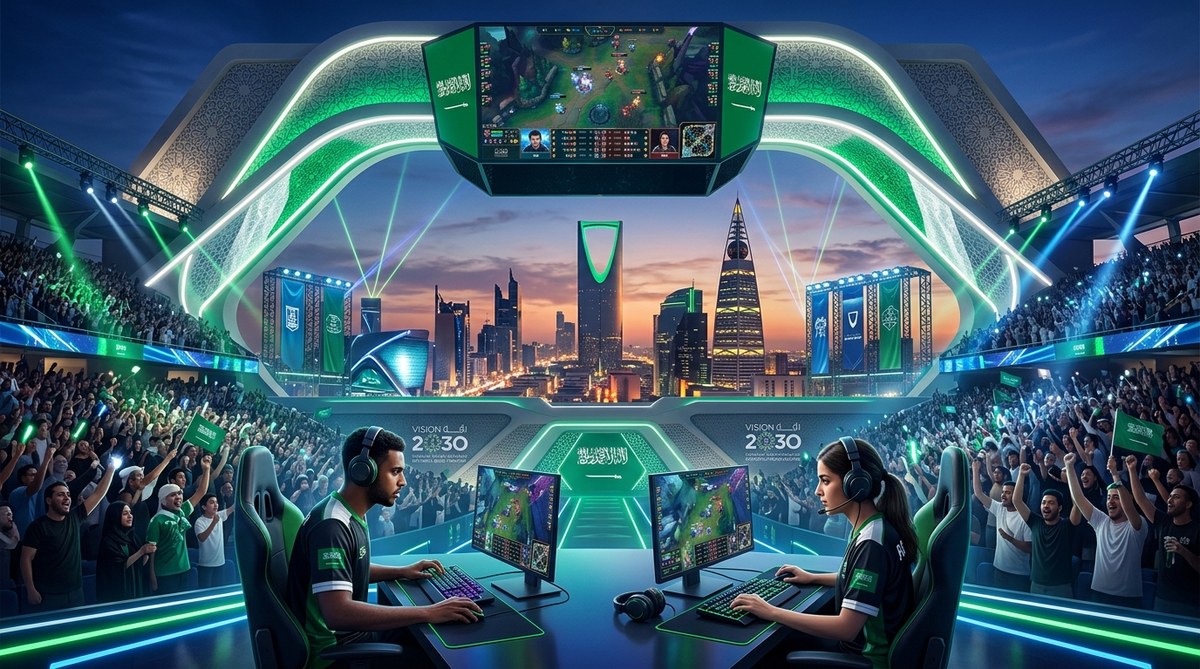
Saudi Arabia’s Gaming Vision 2030 Is Transforming the Regional Esports Landscape
Saudi Arabia is pouring billions into gaming and esports, transforming from a consumer market into a global industry powerhouse. The Kingdom’s Vision 2030 initiative has placed interactive entertainment at the center of its economic diversification plan, and the results are already reshaping the entire Middle East gaming landscape.
Saudi Arabia’s Vision 2030 gaming strategy combines sovereign capital, infrastructure development, and talent programs to position the Kingdom as a global esports hub. Through entities like Savvy Games Group and major tournament hosting, the nation is building a complete ecosystem spanning game development, competitive gaming, and digital entertainment while creating thousands of jobs and attracting international investment partnerships.
The Financial Muscle Behind Saudi Arabia’s Gaming Ambition
The numbers tell a compelling story. Saudi Arabia has committed over $38 billion to gaming and esports investments through its Public Investment Fund. This isn’t venture capital looking for returns next quarter. This is strategic, patient capital designed to build an industry from the ground up.
Savvy Games Group leads the charge as the primary investment vehicle. Since its formation in 2021, the group has acquired major stakes in global publishers, funded indie studios, and created partnerships that give Saudi developers access to world-class expertise.
The Kingdom’s gaming market already generates between $1.2 and $1.8 billion annually, representing roughly 20% of total MENA gaming revenue. But consumption is just the beginning. The real transformation lies in production, publishing, and competitive infrastructure.
Here’s how the investment strategy breaks down:
- Direct studio acquisitions and equity stakes in established publishers
- Venture funding for emerging developers across mobile, PC, and console platforms
- Infrastructure projects including esports arenas, training facilities, and production studios
- Talent development programs covering game design, programming, and competitive gaming
- Event hosting and tournament operations with multi-million dollar prize pools
The approach differs fundamentally from traditional tech hub strategies. Rather than waiting for organic growth, Saudi Arabia is accelerating every stage simultaneously.
Building Competitive Gaming Infrastructure That Attracts Global Attention
Gamers8 has become the flagship event demonstrating Saudi Arabia’s esports capabilities. The 2023 edition offered a combined prize pool exceeding $45 million across multiple titles, making it one of the richest gaming festivals globally.
The Esports World Cup followed with similar ambition, bringing together top teams across disciplines ranging from first-person shooters to fighting games. These aren’t just tournaments. They’re statements of intent backed by infrastructure that rivals established esports capitals.
Boulevard Riyadh City has hosted major gaming events with capacity for tens of thousands of spectators. The venue features broadcast-quality production facilities, player training areas, and fan engagement zones that create experiences beyond simple competition viewing.
| Infrastructure Type | Current Status | Planned Expansion |
|---|---|---|
| Dedicated esports arenas | 3 major facilities | 12+ by 2027 |
| Game development studios | 15+ active studios | 50+ target by 2030 |
| Training academies | 5 operational | Regional network |
| Broadcast centers | 2 full production | 6 planned facilities |
The physical infrastructure supports a broader ecosystem. High-speed internet penetration exceeds 95% in urban areas. Mobile connectivity reaches nearly the entire population. These fundamentals enable both casual gaming and competitive play at scale.
Professional teams are establishing regional headquarters in Riyadh and Jeddah. International organizations see Saudi Arabia as the gateway to Middle Eastern audiences while benefiting from government support programs designed to attract gaming businesses.
Talent Development Programs Targeting Local and Regional Players
Vision 2030 recognizes that infrastructure means nothing without skilled people to operate it. The National Gaming and Esports Strategy includes comprehensive talent programs addressing every level of the industry.
Saudi Electronic University now offers game design and development programs. These aren’t token courses. They’re full degree programs developed with input from global publishers and staffed by industry veterans.
The Saudi Esports Federation runs player development pathways identifying promising competitors as young as 12. Training programs cover game mechanics, mental preparation, physical fitness, and media skills needed for professional careers.
“We’re not just creating players. We’re building an entire generation that understands gaming as a legitimate career path with the same rigor and support as traditional sports.” – Saudi Esports Federation representative
Women’s participation receives specific focus through dedicated programs and events. The Kingdom has moved aggressively to ensure female gamers have equal access to training, competition, and career opportunities in an industry historically dominated by men.
For industry professionals looking to understand why the Middle East gaming market is outpacing global growth in 2024, Saudi talent initiatives provide crucial context about long-term sustainability.
How Mobile Gaming Dominance Shapes Strategy
Mobile gaming accounts for 70-80% of Saudi gaming revenue. This mobile-first reality drives both investment priorities and content development strategies.
The Kingdom has roughly 25-26 million active gamers among a population of 36 million. Smartphone penetration approaches 100% among youth demographics. This creates a massive addressable market for mobile titles, particularly those supporting Arabic language and culturally relevant content.
Savvy Games Group has invested heavily in mobile publishers and developers. The strategy recognizes that mobile platforms offer the lowest barriers to entry for new players while supporting the most diverse range of game types.
Popular genres span casual puzzle games to competitive multiplayer shooters. Battle royale titles like PUBG Mobile maintain enormous followings. Strategy games with social elements drive consistent engagement. Sports simulations attract fans who follow both digital and physical competitions.
Hardware considerations matter too. Players seeking optimal mobile gaming experiences can find guidance through resources covering the perfect gaming phone for PUBG Mobile and Genshin Impact, which addresses performance needs specific to demanding mobile titles.
The mobile focus extends beyond consumption. Saudi developers are creating mobile-first content designed for regional audiences, with several titles achieving meaningful download numbers across MENA markets.
Strategic Partnerships Connecting Saudi Arabia to Global Gaming
Vision 2030’s gaming strategy relies on partnerships that transfer knowledge while building commercial relationships. These aren’t passive investments. They’re active collaborations designed to accelerate capability development.
Savvy Games Group has established relationships with major publishers across Asia, North America, and Europe. These partnerships often include training components, technology sharing, and co-development opportunities that benefit Saudi studios.
The Kingdom has hosted development conferences bringing together creators from dozens of countries. These events facilitate relationship building while showcasing Saudi Arabia’s growing capabilities to international audiences.
Educational partnerships connect Saudi institutions with established game development programs globally. Students gain access to industry-standard tools and methodologies while building networks that extend beyond the Kingdom.
Tournament partnerships with organizations like ESL and BLAST bring world-class production expertise to Saudi events. Local teams learn broadcast techniques, event management, and audience engagement strategies through direct collaboration.
Creating Jobs and Economic Diversification Beyond Oil
The gaming initiative serves Vision 2030’s core objective of reducing oil dependence. Current projections suggest the sector could create over 39,000 jobs by 2030, spanning development, esports, content creation, and supporting services.
These aren’t just technical roles. The ecosystem requires marketing professionals, business development specialists, legal experts, event managers, and countless other positions that diversify the employment landscape.
Average salaries in gaming and esports exceed many traditional sectors, attracting educated youth who might otherwise seek opportunities abroad. The brain drain that has affected many Middle Eastern nations reverses when local opportunities match or exceed international alternatives.
Supporting industries benefit as well. Hardware retailers see increased demand for gaming peripherals and high-performance devices. Internet service providers invest in infrastructure to support gaming traffic. Content creators build audiences around gaming content, generating advertising and sponsorship revenue.
For those considering the hardware ecosystem, understanding gaming laptops available in the UAE and Saudi Arabia provides insight into the consumer technology market supporting this growth.
The economic impact extends to tourism. Major tournaments attract international visitors who spend on hotels, dining, and entertainment beyond the gaming events themselves. Riyadh and Jeddah are positioning as gaming tourism destinations alongside their traditional cultural attractions.
Challenges and Criticisms Facing the Gaming Vision
Not everyone celebrates Saudi Arabia’s gaming push. Critics point to the Kingdom’s human rights record and question whether gaming investments represent genuine reform or simply reputation management.
Some international players and organizations have boycotted Saudi events, citing concerns about sportswashing. These criticisms create genuine challenges for organizers seeking to attract top-tier talent and maintain legitimacy within gaming communities.
Infrastructure development faces practical hurdles. Building world-class facilities requires time and expertise that can’t be purchased instantly. Early events experienced production issues and logistical problems that more established venues avoid.
Talent development takes years to bear fruit. While programs are in place, creating a generation of world-class developers and competitors requires sustained effort and patience that may test political will.
Cultural factors create complexity as well. Gaming content often conflicts with conservative social norms. Finding the balance between global gaming culture and local values remains an ongoing negotiation.
Competition from established gaming hubs presents another challenge. South Korea, China, and the United States have decades of infrastructure and expertise. Saudi Arabia must differentiate its value proposition beyond simply offering larger prize pools.
The Regional Ripple Effect Across MENA Gaming Markets
Saudi Arabia’s gaming investments don’t exist in isolation. The Kingdom’s initiatives are lifting the entire MENA gaming ecosystem through shared infrastructure, talent mobility, and increased global attention.
Smaller Gulf states benefit from proximity to Saudi events and facilities. Players from UAE, Kuwait, Bahrain, and Qatar access training programs and competitions previously requiring international travel.
North African markets see increased investment as publishers and developers attracted to Saudi Arabia expand their regional footprint. Egypt, Morocco, and Tunisia have active development communities benefiting from Saudi-backed funding and partnership opportunities.
Arabic language gaming content receives renewed focus. Historically underserved by global publishers, Arabic-speaking players now see increasing localization efforts and culturally relevant original content as developers recognize the market’s commercial potential.
Regional tournaments create competitive pathways for players across MENA. Rather than needing to relocate to Europe or Asia for professional opportunities, talented gamers can build careers closer to home.
The infrastructure investments also address technical challenges like reducing gaming lag and ping issues across Middle Eastern servers, improving the experience for players throughout the region.
What This Means for International Gaming Companies
Global publishers view Saudi Arabia as both a market and a strategic partner. The Kingdom offers capital, infrastructure, and access to MENA audiences in exchange for expertise and content.
Investment opportunities range from direct equity stakes to publishing partnerships and technology licensing. Saudi entities have shown willingness to pay premium valuations for strategic assets that advance their capabilities.
Development partnerships allow studios to access Saudi funding while maintaining creative control. These arrangements often include requirements for local hiring or knowledge transfer but provide financial stability many independent developers struggle to achieve.
Event partnerships offer guaranteed revenue and production support in exchange for content rights and Saudi branding. Major esports properties can secure multi-year agreements that provide financial certainty while expanding their global footprint.
The risks are real. Companies must navigate political sensitivities, potential boycotts, and reputational concerns. Due diligence extends beyond financial considerations to include social and political factors that don’t typically affect business decisions.
For organizations willing to engage, Saudi Arabia represents one of the fastest-growing gaming markets globally with government backing that eliminates many traditional market-entry barriers.
How Vision 2030 Gaming Fits the Broader Economic Picture
Gaming and esports represent just one pillar of Vision 2030’s diversification strategy. The initiative includes tourism development, entertainment expansion, technology investment, and social reforms designed to transform Saudi society and economy.
Gaming synergizes with other Vision 2030 priorities. Entertainment zones like Qiddiya will incorporate gaming attractions alongside theme parks and cultural venues. Tourism initiatives promote Saudi Arabia as a destination for gaming events alongside religious pilgrimage and cultural experiences.
Technology investments in artificial intelligence, cloud computing, and digital infrastructure support gaming while serving broader economic objectives. The skills developed through game development transfer to other software sectors.
Youth engagement represents a critical success factor. With over 60% of the population under 30, Vision 2030 must create opportunities for millions of young Saudis entering the workforce. Gaming offers careers aligned with youth interests and global economic trends.
International perception matters enormously. Gaming events generate positive media coverage and cultural soft power that complement traditional diplomacy. Successful esports tournaments reach audiences that would never engage with government communications.
The Timeline and Milestones Ahead
Vision 2030 operates on clear timelines with measurable objectives. Gaming and esports targets include specific goals for job creation, revenue generation, and international recognition.
By 2025, Saudi Arabia aims to host at least 10 major international gaming events annually. Current trajectory suggests this target will be exceeded, with multiple large-scale tournaments already scheduled.
By 2027, the Kingdom expects 30+ operational game development studios employing thousands of developers. Early progress indicates this goal is achievable given current investment pace and international partnerships.
By 2030, gaming and esports should contribute over $13 billion to GDP while creating the 39,000+ jobs mentioned earlier. Achieving these targets requires sustained investment and successful talent development.
Intermediate milestones include:
- Launching Saudi-developed games that achieve international commercial success
- Producing Saudi esports athletes who compete at the highest international levels
- Establishing Saudi Arabia as a preferred location for gaming industry conferences and business events
- Creating Arabic gaming content that resonates across MENA markets
Progress tracking occurs through regular reporting and public updates. The transparency serves both accountability and marketing purposes, demonstrating commitment while attracting continued investment.
Common Misconceptions About Saudi Gaming Strategy
Several myths persist about Saudi Arabia’s gaming initiatives that deserve correction. Understanding the reality helps investors, developers, and observers make informed assessments.
Misconception: Saudi Arabia just wants to host tournaments and doesn’t care about actual game development.
Reality: While events generate visibility, the majority of investment flows to development studios, publishing, and long-term infrastructure. Savvy Games Group’s portfolio emphasizes content creation over event hosting.
Misconception: The strategy focuses exclusively on esports and ignores casual gaming.
Reality: Investment spans all gaming categories, with significant capital allocated to mobile gaming, casual titles, and single-player experiences alongside competitive gaming.
Misconception: Saudi gaming initiatives are purely top-down with no grassroots support.
Reality: The Kingdom has an enormous existing gaming community. Vision 2030 builds on genuine consumer demand rather than creating artificial interest.
Misconception: All Saudi gaming investment comes from oil revenue.
Reality: While the Public Investment Fund derives from oil wealth, the gaming strategy aims to create sustainable revenue streams independent of hydrocarbon markets.
Misconception: Saudi Arabia wants to control global gaming.
Reality: The goal is meaningful participation and regional leadership, not global domination. Realistic targets focus on becoming a top-10 gaming market and development hub.
Practical Steps for Engaging with Saudi Gaming Opportunities
Organizations and individuals interested in Saudi Arabia’s gaming ecosystem can take concrete actions to participate.
For game developers, research Savvy Games Group’s investment criteria and application processes. The organization actively seeks promising studios across all gaming categories and geographic locations.
For esports organizations, monitor tournament announcements and partnership opportunities through the Saudi Esports Federation. Early engagement often provides better terms than waiting for established programs.
For job seekers, Saudi gaming companies increasingly hire international talent for senior positions while developing local junior staff. LinkedIn and specialized gaming job boards list current opportunities.
For investors, Saudi gaming funds often accept co-investment from qualified partners. These arrangements provide exposure to the market while benefiting from local expertise and government relationships.
For educators, partnership opportunities exist with Saudi institutions seeking to build gaming programs. Curriculum development, faculty exchange, and research collaboration all represent viable engagement models.
For content creators, Saudi events welcome international media coverage. Press credentials and creator programs provide access to major tournaments and industry figures.
Why Regional Context Matters for Understanding This Strategy
Saudi Arabia’s gaming push can’t be understood in isolation from broader Middle Eastern dynamics. Regional competition, cultural factors, and geopolitical considerations all shape the strategy.
UAE has positioned Dubai as a gaming and esports hub through its own initiatives. Rather than purely competing, the two nations often complement each other, with different strengths and target segments.
Qatar’s experience hosting major sporting events provides lessons about international event management and reputation building through entertainment.
Egypt’s large population and active development community make it a natural partner for content creation and market expansion.
Cultural considerations around gaming content remain sensitive across the region. Successful strategies must balance global gaming norms with local values and regulatory requirements.
The broader trend toward Arabic-language games that celebrate Middle Eastern culture reflects growing demand for culturally relevant content that Saudi investments help satisfy.
Youth demographics across MENA create enormous market potential. Over 100 million people under 30 across the region represent a massive addressable audience for gaming products and services.
How Success Will Be Measured and Reported
Vision 2030 operates with clear metrics and regular progress reporting. Gaming and esports success will be evaluated across multiple dimensions.
Economic indicators include direct revenue from gaming activities, job creation numbers, foreign investment attracted, and GDP contribution. These quantitative measures provide clear benchmarks for progress.
Competitive success metrics track Saudi teams and players in international tournaments, games developed by Saudi studios that achieve commercial success, and international recognition through industry awards.
Infrastructure measures count operational facilities, trained professionals, and technical capabilities like server infrastructure and development tools.
Cultural indicators assess gaming participation rates, diversity metrics, and international perception of Saudi Arabia’s gaming ecosystem.
Regular reports track progress against these metrics, with adjustments made when targets prove unrealistic or new opportunities emerge. The transparency serves both accountability and marketing purposes.
The Bigger Picture for Middle Eastern Tech and Digital Economy
Gaming represents just one component of a broader digital transformation across the Middle East. The region is investing heavily in technology infrastructure, digital services, and knowledge economy development.
Saudi Arabia’s gaming strategy aligns with similar initiatives in artificial intelligence, fintech, smart cities, and digital government. These efforts share common goals of economic diversification, youth employment, and global competitiveness.
The success or failure of gaming investments will influence broader technology strategies. Positive results validate the approach of using sovereign capital to accelerate industry development. Challenges may prompt reassessment of similar initiatives in other sectors.
Regional technology ecosystems benefit from the talent development, infrastructure investment, and international partnerships that gaming initiatives generate. Skills and relationships built through gaming often transfer to adjacent technology sectors.
For consumers, the gaming investments connect to broader technology trends like smart home devices that work well in Middle Eastern climate conditions and the growing regional technology retail market.
What Happens If the Strategy Succeeds
Successful execution of Saudi Arabia’s gaming vision would fundamentally reshape global gaming geography. The industry currently concentrates in North America, East Asia, and Europe. A thriving Middle Eastern hub would redistribute influence and opportunity.
Job creation on the projected scale would establish gaming as a major employment sector comparable to traditional industries. This normalization would influence education systems, career counseling, and social attitudes toward gaming professions.
Cultural impact could be profound. Saudi-developed games with regional themes and perspectives would introduce global audiences to Middle Eastern stories and settings beyond stereotypical representations.
Economic diversification would demonstrate a viable path for resource-dependent economies seeking sustainable alternatives. Other nations might adopt similar strategies, further decentralizing global gaming.
Esports could achieve mainstream acceptance in the region comparable to traditional sports. This would influence media coverage, sponsorship markets, and youth culture across MENA.
Technology transfer from gaming could accelerate broader digital transformation. Skills in graphics programming, network infrastructure, and user experience design apply across many technology sectors.
The Path Forward for Saudi Arabia’s Gaming Ambition
Vision 2030’s gaming strategy represents an unprecedented experiment in using sovereign capital to build an entertainment industry from scratch. The scale of investment, speed of execution, and breadth of ambition have no real historical precedent.
Early results show genuine progress. Infrastructure exists. Events attract international attention. Investment portfolios include respected properties. Talent programs are operational.
Challenges remain substantial. Cultural tensions, political controversies, and competitive pressures could derail progress. Sustained political will over decades is required for full success.
The ultimate judgment will come from the market. Do players enjoy Saudi-developed games? Do competitors respect Saudi esports organizations? Do developers choose to build studios in the Kingdom? These organic indicators matter more than government announcements.
For the gaming industry, Saudi Arabia is now impossible to ignore. Whether as investor, partner, competitor, or market, the Kingdom has secured its position in global gaming conversations. What happens next will influence the industry for decades to come.
The transformation is already underway. The question isn’t whether Saudi Arabia will impact gaming and esports. It’s how large that impact becomes and whether the ambitious targets of Vision 2030 translate into sustainable, respected participation in the global gaming ecosystem.

Post Comment