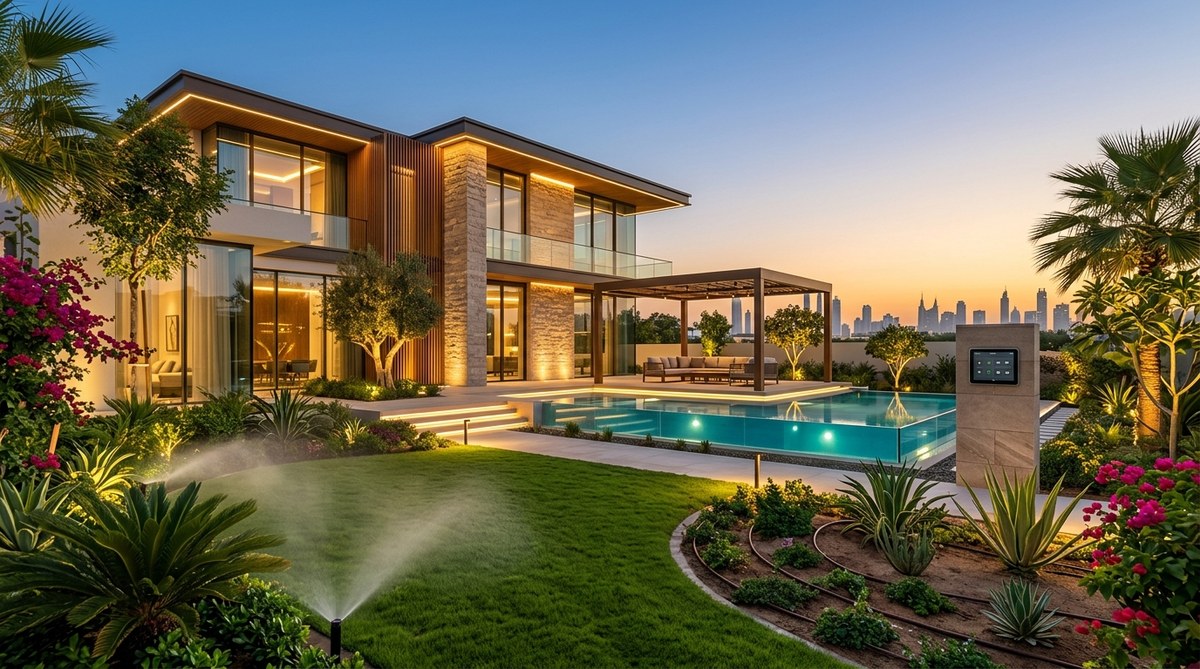
How to Automate Your UAE Villa’s Irrigation and Outdoor Lighting for Summer 2026
Summer in the UAE hits hard. By June, temperatures regularly climb past 45°C, and your villa’s outdoor systems feel the strain. Your garden needs more water, your outdoor lights run on a timer that doesn’t adjust, and you’re left guessing whether your lawn is drowning or drying out. Automating your irrigation and outdoor lighting solves all of that. It saves water, cuts electricity bills, and keeps your landscape looking great without you lifting a finger. Let’s walk through exactly how to set it up for the 2026 summer season.
Automating your UAE villa’s irrigation and outdoor lighting before summer 2026 saves up to 40% on water bills and eliminates the hassle of manual scheduling. Use a smart controller with weather sensors, drip irrigation for plants, and motion-activated LED lights. Focus on products rated for high heat and dust.
Why Summer 2026 Demands a Smarter Approach
The UAE’s summer isn’t just hot. It’s long, humid, and unpredictable with dust storms. Your garden doesn’t care about your schedule. It needs water at specific times, usually before sunrise, to avoid evaporation. Your outdoor lighting needs to switch on when the sun sets, not at a fixed time that drifts by minutes each day.
A basic timer won’t cut it anymore. Smart controllers adjust watering based on recent rainfall, soil moisture, and temperature. They also sync lighting with sunset times automatically. For a villa in Dubai or Abu Dhabi, this means your lawn stays green without wasting a drop, and your pathways stay lit without burning power all night.
The Core Hardware You Need
Before we get into setup, let’s talk gear. The UAE climate is brutal on electronics. Direct sunlight, sand, and humidity kill cheap components fast. Here’s what works.
- Smart irrigation controller: Look for Wi-Fi enabled models from brands like Rain Bird, Hunter, or Rachio. They must support zone-by-zone scheduling.
- Weather sensor: A rain and temperature sensor that talks to your controller. This prevents watering during a rare downpour or when temps drop.
- Drip irrigation lines: For flower beds and shrubs. Drip uses less water and targets roots directly.
- Smart outdoor light switches: Shelly or Sonoff relays rated for outdoor use. They connect to your home Wi-Fi and respond to sunset triggers.
- Motion sensors: For security lighting that only activates when someone is near. This saves energy and reduces light pollution.
- Hub or bridge: Some devices need a central hub like a Philips Hue Bridge or a Samsung SmartThings Hub to coordinate everything.
Step by Step: Setting Up Your Automation
Follow these steps in order. It takes about a weekend for a standard villa, but the payoff lasts all summer.
-
Map your zones: Walk your garden and note each irrigation zone (lawn, shrubs, flower beds, pots). Also map your outdoor lights (pathway, garden, driveway, security). Write down how many sprinklers or drippers each zone has.
-
Install the smart controller: Replace your old irrigation timer with a smart controller. Mount it in a shaded spot, ideally inside your garage or utility room. Connect it to your home Wi-Fi. Most controllers have a companion app for your phone.
-
Add weather sensors: Place the rain and temperature sensor near the controller, but in an open area. Pair it via the app. This sensor will automatically pause watering if rain is detected or if the temperature is too high for effective watering.
-
Set up drip irrigation: Convert your flower beds and shrub areas to drip lines. This is the most water efficient method for the UAE climate. Use pressure compensating drippers to ensure even flow across long runs.
-
Program your watering schedule: Set each zone to water between 4:00 AM and 6:00 AM. This minimizes evaporation. The app will adjust the duration based on weather data. For a typical Dubai villa, lawn zones need about 20 minutes, shrub zones about 10 minutes.
-
Install smart light switches: Replace your outdoor light switches with smart relays. Connect them to your home automation platform. Set them to turn on at sunset and off at sunrise. Use a geofence so lights turn on when you arrive home after dark.
-
Add motion sensors: Place motion sensors at entry points and along pathways. Link them to specific lights. This way, your driveway lights only turn on when a car approaches, and pathway lights activate when someone walks by.
-
Test everything: Run a manual test cycle for irrigation. Check each zone for leaks or dry spots. Test your lights by simulating sunset and motion. Adjust as needed.
Common Mistakes to Avoid
Even with the best gear, a few errors can ruin your setup. Here’s a table of what to watch out for.
| Mistake | Why It’s a Problem | How to Fix It |
|---|---|---|
| Using standard sprinklers for shrubs | Wastes water and causes fungal issues | Switch to drip irrigation for all non-lawn areas |
| Placing the controller in direct sun | Overheats and fails within months | Mount it in a shaded, ventilated area |
| Ignoring soil type | Sandy soil drains fast, clay holds water | Adjust watering duration based on soil test |
| Setting lights to a fixed time | Lights turn on too early or late as days change | Use sunset/sunrise automation, not fixed timers |
| Skipping a rain sensor | Controller waters during rain, wasting water | Install a wired or wireless rain sensor |
A Real-World Schedule for a Dubai Villa
Let’s make this concrete. Imagine you own a 3,000 square foot villa in Arabian Ranches. Your garden has a lawn, a few palm trees, and some bougainvillea. Here’s a sample schedule.
- Lawn zone: 4:30 AM to 4:50 AM, every other day.
- Palm trees: 5:00 AM to 5:10 AM, three times per week.
- Bougainvillea and shrubs: 5:15 AM to 5:25 AM, three times per week, drip irrigation.
- Outdoor pathway lights: On at sunset, off at 11:00 PM.
- Driveway security light: Motion activated, turns off after 5 minutes of no motion.
This schedule keeps everything healthy while using roughly 40% less water than a standard timer system.
Expert advice from a Dubai landscape engineer: “The biggest mistake villa owners make is watering during the day. You lose 60% of the water to evaporation. Always water before sunrise. And use drip irrigation for anything that isn’t grass. Your plants will thank you, and so will your DEWA bill.”
Choosing the Right Smart Home Platform
Your irrigation and lighting need to talk to each other. You have a few options.
- Dedicated irrigation app: Brands like Rachio and Rain Bird have their own apps. They work well but don’t integrate with your lights.
- SmartThings or Hubitat: These hubs connect multiple brands. You can create routines like “if sunset, turn on lights and reduce watering by 10%.”
- Apple HomeKit or Google Home: Good for basic control but limited for complex irrigation schedules.
For most villa owners, a dedicated irrigation app plus a smart light hub is the sweet spot. You get precise control over water and simple automation for lights.
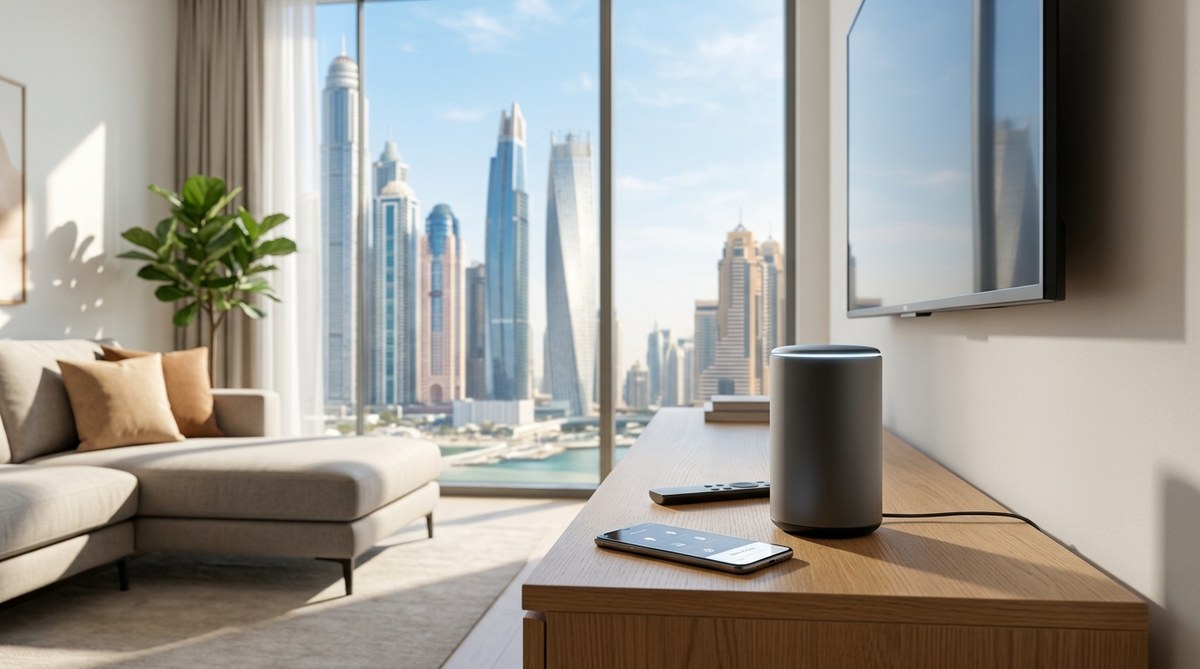
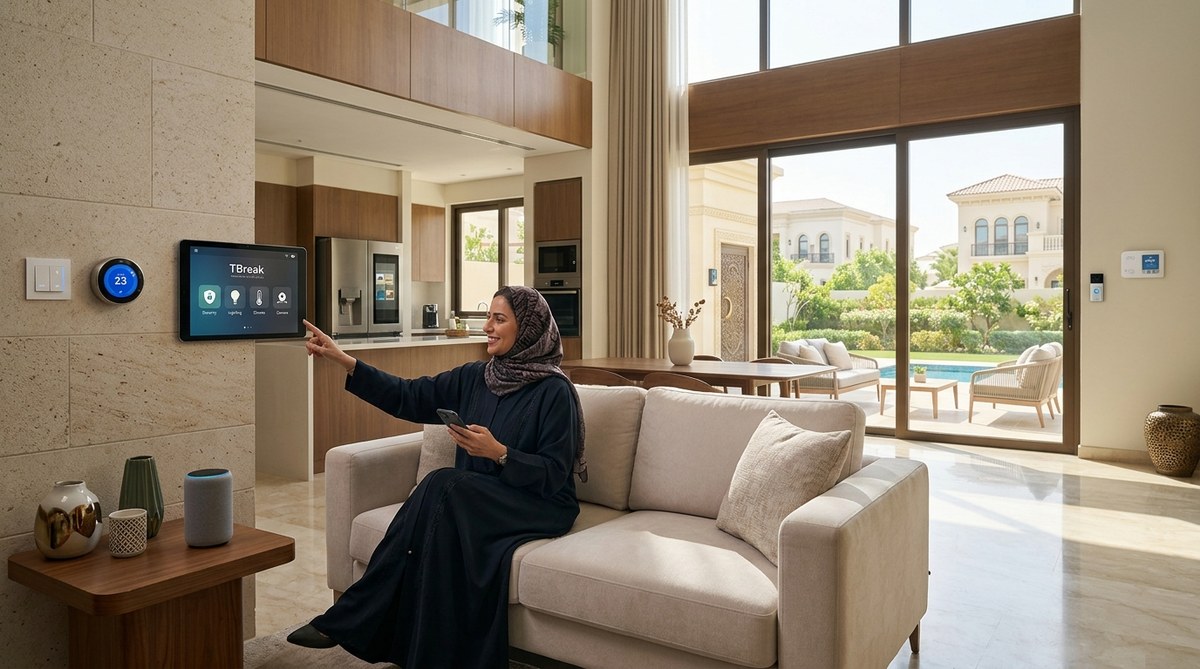
If you are already building a smart home ecosystem, check out our guide on smart home devices that actually work well in Middle Eastern climate conditions. It covers hubs, sensors, and other gear that survives the heat.
What About Retrofitting an Existing System?
You don’t need to rip out your current irrigation system. Most smart controllers can replace your old timer in 30 minutes. The wiring is the same. Just disconnect the old unit, mount the new one, and connect the same valve wires.
For lights, you can replace standard switches with smart relays without changing your fixtures. If you have outdoor sockets, plug in smart plugs rated for outdoor use. This is the easiest path for renters or anyone on a budget.
The Cost Breakdown
Let’s talk numbers. Prices are in AED for 2026.
- Smart irrigation controller: 400 to 1,200 AED
- Weather sensor: 150 to 300 AED
- Drip irrigation conversion (per 100 meters): 200 to 400 AED
- Smart light switches (per switch): 80 to 150 AED
- Motion sensors (per sensor): 50 to 120 AED
- Hub (if needed): 200 to 500 AED
Total for a typical villa: around 1,500 to 3,000 AED. You’ll save roughly 600 to 1,200 AED per year on water and electricity. The system pays for itself in two to three summers.
Products We Recommend for 2026
Based on testing and regional availability, these products handle the UAE climate well.
- Rachio 3 Smart Sprinkler Controller: Excellent app, weather integration, and easy setup. Works with most valve systems.
- Rain Bird ST8I-WiFi: Built for commercial grade use. Very reliable in high heat.
- Hunter Hydrawise: Great for larger properties with many zones.
- Shelly Plus 1PM: A compact smart relay for lights. Supports over the air updates and works without a hub.
- Philips Hue Outdoor Motion Sensor: Works with Hue lights and other Zigbee systems. Very responsive.
- Sonoff ZBMINI: A budget friendly Zigbee switch for lights. Needs a hub but costs under 50 AED.
For more ideas on building out your smart home, read our article on how to build a complete smart home ecosystem on a budget in Dubai. It covers hubs, sensors, and cost saving tips.
Preparing for the 2026 Summer Peak
June through September is the worst. Here’s a checklist to run in late May.
- Test all irrigation zones for leaks or clogs.
- Replace any broken drippers or sprinkler heads.
- Clean the weather sensor. Dust buildup can block rain detection.
- Update your smart controller’s firmware. New versions often improve weather algorithms.
- Check your light timers and motion sensor batteries.
- Adjust your watering schedule as temperatures rise. Increase duration by 5% each month from June to August.
- Set your lights to dim after midnight to save power.
Making It All Work Together
The real magic happens when your systems communicate. Imagine this: it’s a Friday evening in July. The sun sets at 7:12 PM. Your pathway lights turn on automatically. Your irrigation system checks the forecast, sees no rain, and waters your lawn at 4:30 AM the next morning. A dust storm hits at 3:00 AM. The sensor detects the change and delays watering until the storm passes. You wake up to a perfectly hydrated garden without touching a single switch.
That’s the goal. And it’s completely achievable with the right gear and a little planning.
Your Summer 2026 Automation Plan
Here is a bulleted summary of the essential steps.
- Replace your old irrigation timer with a Wi-Fi smart controller.
- Add a weather sensor to prevent overwatering.
- Convert flower beds and shrubs to drip irrigation.
- Use smart switches or relays for outdoor lights.
- Set lights to turn on at sunset and off at sunrise.
- Add motion sensors for security and energy savings.
- Schedule watering between 4:00 AM and 6:00 AM.
- Test your system in late May before the peak heat arrives.
One Final Piece of Advice
Start now. Don’t wait until June. The installation is straightforward, but you want time to tweak the schedule and fix any issues before the real heat arrives. Your plants will adapt better if the system is running consistently from early spring.
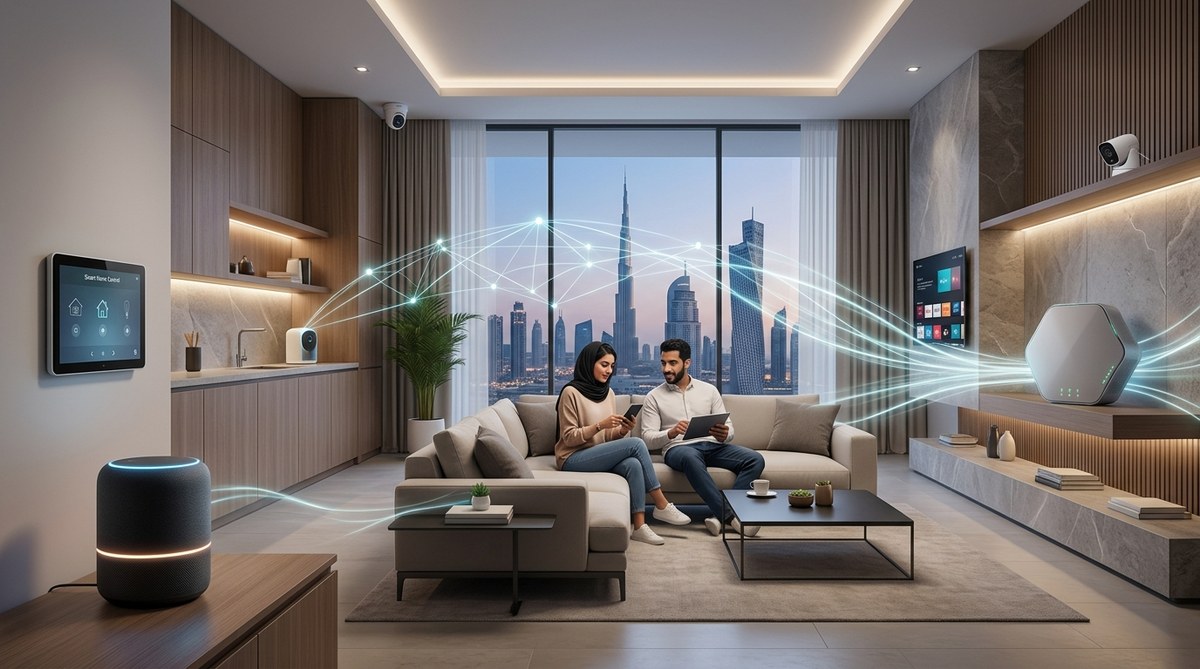
If you run into connectivity issues with your devices, especially in larger villas with thick walls, consider upgrading your network. A mesh Wi-Fi system makes a huge difference. We covered this in detail in our guide on why your smart home devices keep disconnecting in the UAE and how to fix it.
Your villa can handle the summer. You just need to give it the right tools. Automate your irrigation and lighting now, and you’ll spend the summer relaxing instead of worrying about your garden.

Post Comment