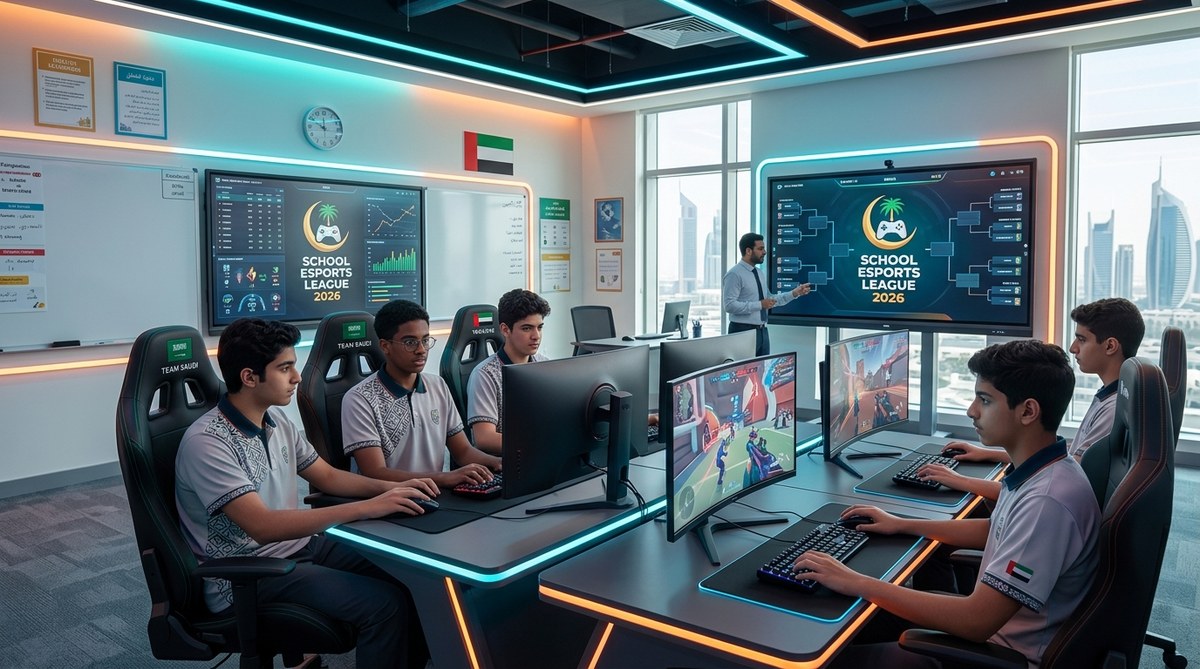
Why 2026 Is the Year Middle Eastern Esports Finally Goes Mainstream in Schools
For years, the conversation around competitive gaming in the Middle East was stuck in a loop. Parents worried about screen time. Administrators saw a distraction. And the only esports infrastructure existed in a few private gaming cafes and massive, government-funded arenas. That story is over. In 2026, the region is witnessing something different: a deliberate, structured movement to bring esports into the classroom. This is not about letting kids play video games all day. It is about building a pipeline for careers, critical thinking, and digital literacy that starts with a school bell.
The integration of Middle East esports schools in 2026 is being driven by national economic visions, a need for STEM engagement, and proven academic frameworks from Asia and Europe. Policymakers should focus on three pillars: curriculum design tied to soft skills, hardware procurement that withstands regional climates, and teacher training programs that demystify competitive gaming for non-gaming staff.
Why 2026 Finally Breaks the Barrier
The stars have aligned for a few specific reasons. First, the financial incentives are now undeniable. Saudi Arabia’s Vision 2030 has poured billions into the gaming sector through the Public Investment Fund and Savvy Games Group. That money is not just for stadiums. It is trickling down to educational grants and pilot programs in cities like Riyadh, Jeddah, and Al Khobar.
Second, the United Arab Emirates has positioned itself as a testbed for pilot programs. Dubai’s Knowledge and Human Development Authority (KHDA) has approved several private schools to run esports modules as part of their extracurricular accreditation. Abu Dhabi’s twofour54 is actively incubating startups that build educational gaming platforms.
Third, the student demand is impossible to ignore. A 2025 survey by a regional telecom giant found that 68% of students aged 13 to 18 in the GCC play competitive games at least three times a week. Schools that ignore this are losing a direct line to student engagement. The shift in 2026 is about turning that existing passion into structured, measurable outcomes.
The Three Pillars of a School Esports Program
To get this right, you need to build on a stable foundation. Here are the three areas that every school administrator in the Middle East needs to address.
1. Curriculum Design That Ties to Soft Skills
This is the most critical piece. You cannot just throw a PC lab into a room and call it an esports academy. The curriculum must be mapped to skills that parents and accreditation boards respect.
- Communication and teamwork: Games like Valorant and Rocket League require constant callouts and split-second coordination.
- Strategic thinking and data analysis: Students learn to review match replays, analyze opponent patterns, and adjust strategies.
- Technical literacy: Understanding hardware specifications, network latency, and streaming software.
- Event management: Running a school tournament teaches logistics, marketing, and conflict resolution.
A good program will have students spend 40% of their time on these non-gaming skills and 60% on actual gameplay and competition.
2. Hardware That Survives the Heat
This is a specific pain point in the region. A gaming PC that works perfectly in a climate-controlled office in California can throttle and crash in a school computer lab in Dubai during August. You need equipment designed for higher ambient temperatures.
- Choose laptops or desktops with vapor chamber cooling or high-CFM fans.
- Ensure the lab has dedicated air conditioning that can maintain 22 degrees Celsius even when 20 machines are running benchmarks.
- Invest in surge protectors and UPS units because the power grid in some areas can fluctuate.
For a solid starting point, check out our guide on best gaming laptops under 5000 AED available in UAE and Saudi Arabia to see what fits a school budget.
3. Teacher Training and Buy-In
Your IT teacher might be a whiz at networking but has never played a round of Overwatch. Your PE teacher might understand competition but not the difference between a GPU and a CPU. You need a training program that bridges that gap.
“The biggest mistake schools make is assuming that because kids know how to play, the teachers will know how to coach. You need a certified esports coach who understands pedagogy, not just kill-death ratios.” — Ahmed Al Mazrouei, Head of Digital Learning at a Dubai-based private school group.
A Practical Framework for Launching Your Program
Here is a step-by-step process that has worked for schools in the region that launched programs in the first half of 2026.
- Assess your infrastructure. Audit your current internet bandwidth, power supply, and physical space. You need a minimum of 100 Mbps dedicated to the lab for 10 concurrent players.
- Select your titles. Start with 2 to 3 games that are age-appropriate and support local servers. Good starting titles include Rocket League (all ages), League of Legends (13+), and Valorant (16+). Avoid games with high entry barriers like StarCraft II for beginners.
- Partner with a regional esports organization. Groups like Galaxy Racer or the Saudi Esports Federation offer curriculum templates and sometimes hardware sponsorship for pilot programs.
- Run a pilot semester. Do not try to scale to the whole school at once. Start with an after-school club for 20 students. Use that semester to work out the kinks in scheduling, equipment maintenance, and parental communication.
- Measure outcomes. Track metrics beyond win rates. Look at attendance, grade point averages in STEM subjects, and student satisfaction surveys. Present these to the school board for expansion approval.
Common Mistakes and How to Avoid Them
Even with the best intentions, schools make predictable errors. Here is a table of the most frequent mistakes and the correct approach.
| Mistake | Why It Fails | The Correct Approach |
|---|---|---|
| Buying the cheapest gaming PCs | They throttle in the heat and break down within a year. | Invest in systems with robust cooling and a 3-year on-site warranty from a local distributor. |
| Letting students play any game | Parents object to violent content, and the program loses credibility. | Curate a list of approved titles with clear age ratings and educational justification. |
| Ignoring the gender divide | Some co-ed schools face cultural challenges with mixed-gender teams. | Offer separate practice times or all-girls and all-boys leagues to ensure equal access. |
| Treating it like a regular club | Without structure, it becomes just a gaming session. | Require players to submit weekly strategy journals and participate in skill-building drills. |
| Neglecting the streaming aspect | Esports is also about content creation. | Teach basic OBS Studio setup, commentary skills, and video editing as part of the program. |
Why Mobile Esports Matters More in the Middle East
In the United States, school esports is heavily PC-focused. In the Middle East, mobile gaming is the dominant force. According to a 2026 market report, mobile games account for 62% of all gaming revenue in the region. This has a direct impact on school programs.
- Cost: A school can equip a mobile esports lab with high-end tablets or gaming phones for a fraction of the cost of a PC lab. For example, a device like the ASUS ROG Phone 8 offers desktop-level performance in a portable form factor.
- Accessibility: Students already own smartphones. A program that uses mobile titles like PUBG Mobile or Mobile Legends removes the hardware barrier to entry.
- Cultural fit: Mobile gaming is seen as a more casual, social activity in many households, which reduces parental pushback.
If you are looking for devices that can handle both gaming and schoolwork, our guide on top mid-range smartphones for middle eastern gamers in 2026 is a good resource.
The Role of National Championships and Scholarships
The final piece of the puzzle is the pathway beyond high school. In 2026, several universities in the region are offering esports scholarships. The University of Sharjah, Abu Dhabi University, and Prince Sultan University in Riyadh have all announced competitive gaming programs that include tuition waivers for top players.
These scholarships are not just for pro players. They cover degrees in game design, computer science, sports management, and digital marketing. A student who joins a high school esports program today can realistically see a direct line to a university degree and a job in a growing industry.
The Saudi Esports Federation has also announced a national high school league for 2026, with regional qualifiers in every province. The winning team gets a trip to the Esports World Cup in Riyadh. This kind of incentive drives enrollment and gives administrators a clear goal to work toward.
What the Next 12 Months Look Like
Here is a timeline of what schools should expect in the coming year.
- Q1 2026: Pilot programs in 15 private schools across Dubai and Abu Dhabi begin publishing their results. Expect to see case studies on student engagement and academic improvement.
- Q2 2026: The Saudi Ministry of Education releases a formal framework for esports in public schools, including recommended hardware specs and curriculum hours.
- Q3 2026: The first inter-school tournament for the UAE and Saudi Arabia is scheduled, with a prize pool that includes scholarships and hardware.
- Q4 2026: More than 100 schools are expected to have active esports programs, up from roughly 30 at the start of the year.
Building a Sustainable Esports Ecosystem in Your School
This is not a one-year project. The schools that succeed will be the ones that treat esports like they treat basketball or debate. It needs a dedicated coach, a budget for equipment upgrades every two years, and a clear set of rules for participation. It also needs to be tied to the broader school mission. If your school emphasizes innovation and future skills, esports fits naturally. If your school is more traditional, start with a small club and let the results speak for themselves.
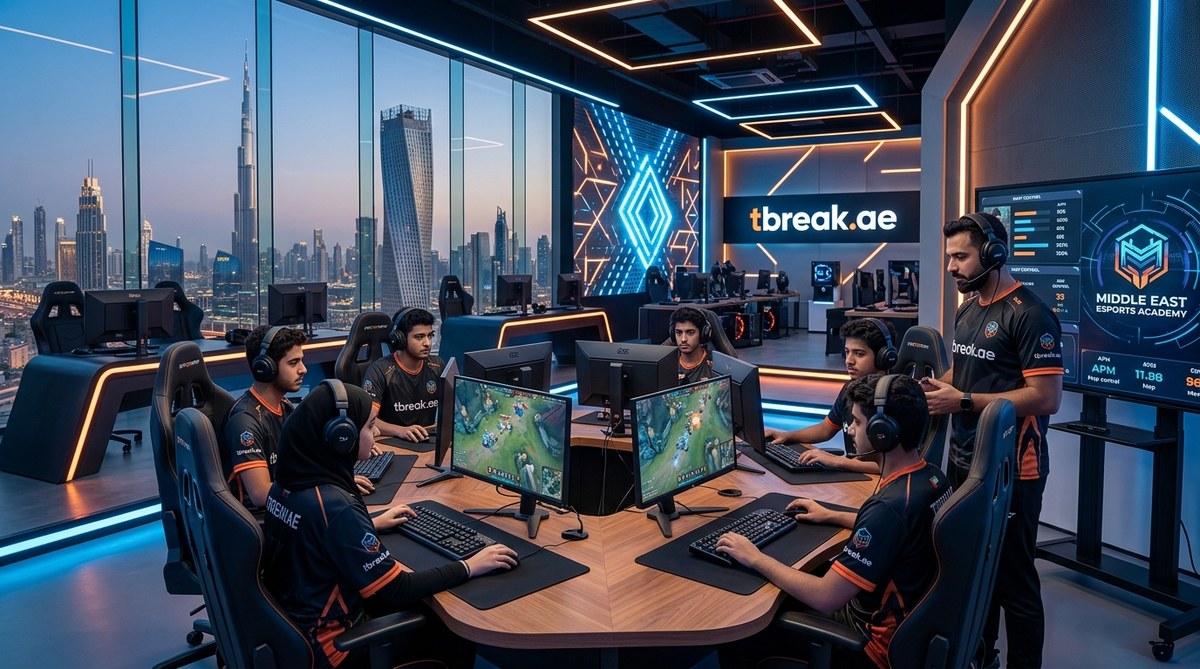
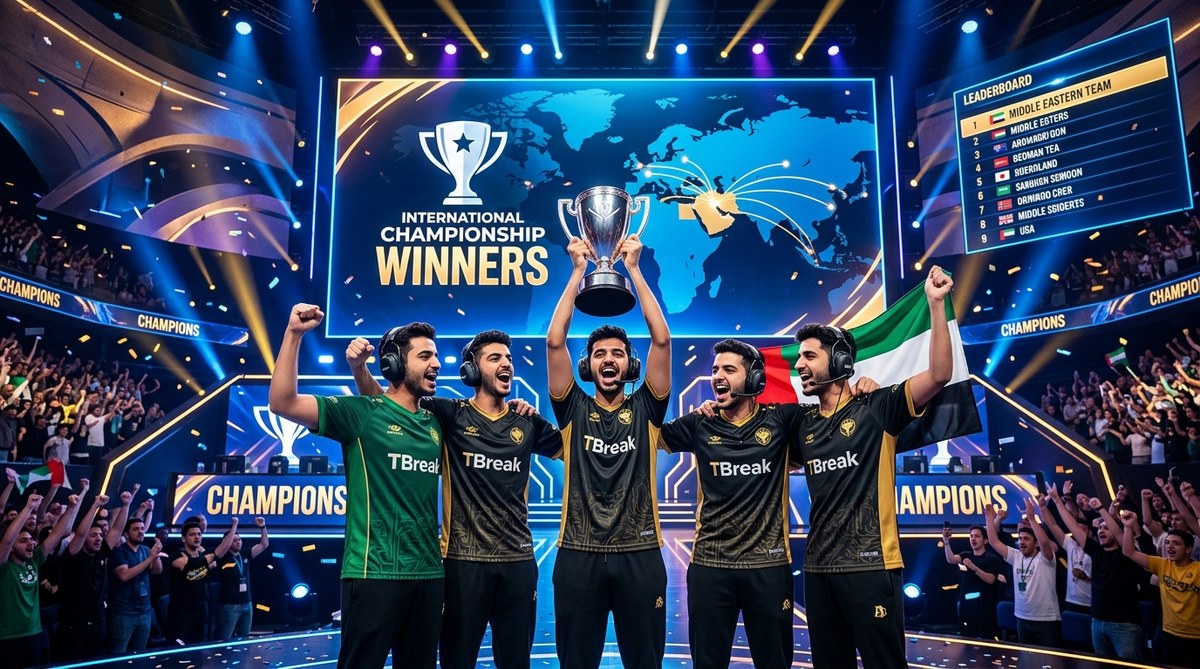
The technology is ready. The student interest is there. The government support is stronger than ever. The only missing piece is the will to act. For a deeper look at how regional teams are already competing, read our article on how middle eastern esports teams are competing on the global stage in 2026. The groundwork has been laid. Now it is up to school leaders to pick up the controller and start building the next generation of digital leaders.


Post Comment