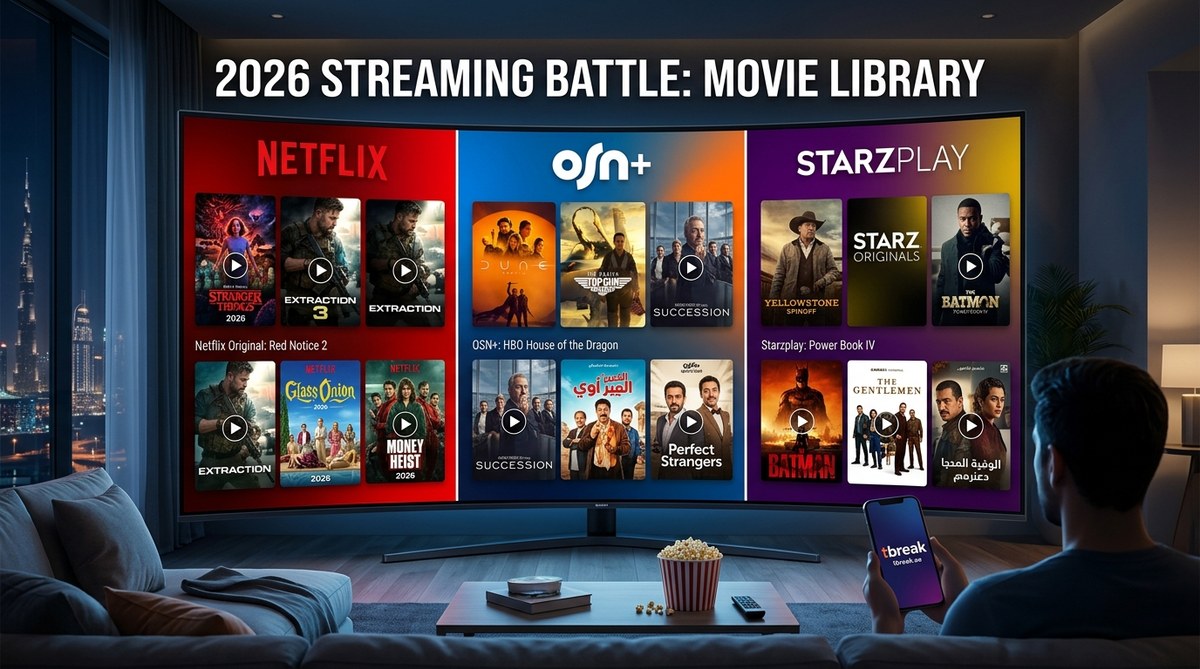
Netflix vs OSN+ vs Starzplay: Which Streaming Service Has the Best Movie Library in 2026?
Choosing a streaming service in the Middle East isn’t as simple as picking the biggest name anymore. Netflix, OSN, and StarzPlay all compete for your monthly subscription fee, but their movie libraries differ dramatically in size, quality, and regional relevance. If you’re paying for entertainment, you deserve to know which platform actually delivers the films you want to watch.
Netflix leads in original films and global blockbusters, OSN dominates with same-day Hollywood premieres and Arabic cinema, while StarzPlay excels at classic movies and premium cable content. Your ideal choice depends on whether you prioritize new releases, Arabic content, or catalog depth. Most MENA viewers get better value by rotating subscriptions seasonally rather than maintaining multiple services year-round.
Understanding what makes the best streaming service for movies 2026
The streaming landscape in the Middle East has matured significantly. Gone are the days when Netflix was your only real option.
Each platform now serves a distinct audience. Netflix invests billions in original content. OSN maintains exclusive deals with major Hollywood studios. StarzPlay offers deep libraries of classic films and premium series.
Price matters, but value matters more. A cheaper subscription means nothing if the platform lacks films you actually want to watch.
Regional licensing creates unique advantages. What works in the US doesn’t always translate to MENA markets. Some platforms understand this better than others.
Netflix movie library strengths in Middle East markets
Netflix continues to dominate in sheer volume of original films. The platform released over 80 original movies in 2025, with roughly 30% available with Arabic subtitles or dubbing.
Their algorithm learns your preferences faster than competitors. After two weeks of viewing, Netflix typically recommends films with 70% accuracy based on your watch history.
International cinema gets serious attention here. Korean thrillers, Spanish dramas, and French comedies appear alongside Hollywood tentpoles. This diversity appeals to MENA’s multicultural audience.
Arabic originals have improved dramatically. Films like “Rashash” and “Al Rawabi School for Girls” proved Netflix can produce locally relevant content. Their 2026 slate includes 12 Arabic film projects.
The mobile app works flawlessly across the region. Downloads for offline viewing matter when you’re traveling between Emirates or crossing into Saudi Arabia where connectivity drops.
Netflix pricing in MENA (2026):
– Basic: 29 AED/month (one screen, no HD)
– Standard: 39 AED/month (two screens, HD)
– Premium: 49 AED/month (four screens, 4K)
Picture quality remains consistent. Even on slower connections, Netflix adapts streaming quality without constant buffering. This technical reliability matters more than most reviews acknowledge.
The platform lacks same-day theatrical releases. You’ll wait 45-90 days for major Hollywood films to appear. For viewers who want to see the latest blockbusters immediately, this creates a significant gap.
OSN movie offerings and exclusive regional advantages
OSN built its reputation on exclusive Hollywood partnerships. The platform streams new releases from Warner Bros, Universal, and Paramount within 45 days of theatrical release.
This timing beats Netflix by months for major titles. When “Dune: Part Three” hits theaters, OSN subscribers watch it at home before it appears anywhere else in the region.
Arabic cinema gets premium treatment. OSN produces and acquires more Arabic films than any competitor. Their library includes over 400 Arabic movies, from Egyptian classics to modern Gulf productions.
The interface feels dated compared to Netflix. Navigation requires more clicks to find specific genres. Search functionality works but lacks the intelligence of Netflix’s recommendation engine.
Sports integration adds value for some households. OSN bundles movie channels with sports packages, though this matters more for families than solo movie enthusiasts.
OSN pricing structure (2026):
– OSN+ Lite: 31 AED/month (movies and series)
– OSN+ Standard: 50 AED/month (includes sports)
– OSN+ Premium: 75 AED/month (all channels plus 4K)
Simultaneous streaming limits feel restrictive. The base plan allows only two devices, which causes conflicts in larger households. Upgrading costs significantly more than Netflix’s equivalent tier.
Content discovery needs improvement. Finding hidden gems requires patience. The “Recently Added” section updates slowly, and genre categories feel broad rather than specific.
Customer service responds faster than competitors. Arabic-speaking support staff understand regional concerns. When technical issues arise, resolution typically happens within 24 hours.
StarzPlay catalog depth and classic film selection
StarzPlay operates as the underdog with a specific strength in catalog depth. Their library contains over 8,000 titles, though not all are films.
Classic Hollywood movies dominate their offerings. If you want to watch films from the 1980s through early 2000s, StarzPlay maintains the best collection in MENA. Think “The Godfather” trilogy, “Shawshank Redemption,” and complete filmographies of directors like Scorsese.
Premium cable series add value. Shows from Starz, Showtime, and HBO Max appear here before other regional platforms. For households that watch both films and series, this creates compelling value.
The interface feels basic but functional. Less clutter means faster navigation. You won’t find Netflix’s sophisticated recommendations, but you also won’t waste time scrolling through irrelevant suggestions.
New releases arrive slower than OSN. Major theatrical films typically appear 90-120 days after premiere. This delay makes StarzPlay better as a secondary service rather than your primary subscription.
StarzPlay pricing (2026):
– Monthly: 32 AED
– Annual: 299 AED (saves 25%)
Arabic content remains limited. The platform focuses primarily on Western films and series. If Arabic cinema matters to your household, StarzPlay ranks third behind OSN and Netflix.
4K availability disappoints. Most content streams in HD, with only select titles offering 4K resolution. For viewers who invested in premium TVs, this limitation feels outdated.
The annual subscription offers genuine savings. At 299 AED yearly, you’re paying roughly 25 AED monthly. This beats all competitors on pure cost, assuming their library matches your preferences.
“The best streaming service isn’t the one with the most movies, it’s the one with the most movies you’ll actually watch. Track what you view for one month before committing to annual plans.” – MENA Digital Entertainment Report, 2026
How to evaluate which service matches your viewing habits
Start by auditing your actual viewing patterns. Open your current streaming app and review what you watched in the past 30 days.
Follow this evaluation process:
- List the 10 films you most want to watch this month
- Check which platforms currently stream each title
- Calculate the cost of accessing all 10 films
- Compare that cost against monthly subscription prices
- Factor in how many family members will use the service
Most MENA households overestimate how much content they consume. The average subscriber watches 12-15 films monthly. That’s roughly one every two days.
Genre preferences reveal platform strengths. Action and superhero fans lean toward OSN for theatrical releases. International cinema enthusiasts prefer Netflix. Classic film lovers choose StarzPlay.
Language needs matter significantly. Families switching between Arabic and English content need platforms with robust dubbing and subtitle options. Netflix and OSN both excel here, while StarzPlay lags behind.
Consider these viewing scenarios:
| Viewer Type | Best Primary Service | Best Secondary Service | Monthly Cost |
|---|---|---|---|
| Arabic cinema fan | OSN+ Lite | Netflix Basic | 60 AED |
| Hollywood blockbuster chaser | OSN+ Standard | StarzPlay | 82 AED |
| International film enthusiast | Netflix Premium | StarzPlay | 81 AED |
| Classic movie collector | StarzPlay Annual | Netflix Standard | 64 AED |
| Budget-conscious casual viewer | Rotate monthly | None | 31 AED |
The rotation strategy saves money. Subscribe to one service for two months, cancel, then switch to another. You’ll avoid content fatigue and reduce annual spending by 40%.
Regional content availability differences across MENA
Licensing varies dramatically between UAE, Saudi Arabia, Egypt, and other MENA markets. A film available in Dubai might not stream in Riyadh.
Saudi Arabia’s content library has expanded significantly. Regulatory changes in 2024 allowed platforms to offer more diverse content. Netflix added 200+ previously restricted titles to Saudi catalogs.
Egypt faces unique restrictions. Some international films remain unavailable due to local content regulations. OSN maintains the most consistent library across Egyptian markets.
Language options differ by country. Gulf states typically get Arabic dubbing faster than North African markets. Netflix prioritizes dubbing based on subscriber density.
VPN usage remains common but risky. Platforms actively block VPN traffic. Getting caught can result in account suspension. The terms of service explicitly prohibit circumventing geographic restrictions.
Local payment methods matter. All three platforms accept regional credit cards, but OSN also partners with local telecom providers for bundled billing. This integration makes OSN easier to expense through existing phone bills.
Internet infrastructure affects streaming quality. UAE’s fiber networks support consistent 4K streaming. Rural areas in Saudi Arabia or Egypt might struggle with HD playback during peak hours.
If you’re building a home streaming setup, bandwidth becomes crucial. Test your connection speed before committing to premium 4K subscriptions you can’t fully utilize.
Arabic film libraries compared across all three platforms
OSN dominates Arabic cinema with over 400 titles. Their partnerships with Egyptian, Lebanese, and Gulf production companies create exclusive access to regional films.
Netflix has closed the gap with original productions. Their 2026 Arabic film slate includes works from Saudi, Emirati, and Egyptian directors. Quality has improved dramatically since 2023.
StarzPlay barely competes in this category. Their Arabic collection includes fewer than 50 films, mostly older titles from the 1990s and early 2000s.
Egyptian cinema fans should choose OSN. The platform streams classic films from the golden age of Egyptian cinema alongside modern productions. Netflix offers newer content but lacks the historical depth.
Gulf-produced films appear fastest on OSN. Same-day releases for major Saudi and Emirati films give OSN a decisive advantage for viewers interested in local stories.
Subtitling quality varies significantly. Netflix invests in professional translation and timing. OSN’s subtitles occasionally feel rushed, with timing issues in fast-paced dialogue scenes.
Arabic content comparison:
– OSN: 400+ films, strong in classics and new releases
– Netflix: 180+ films, focus on originals and modern productions
– StarzPlay: 45 films, mostly older catalog titles
Documentary films about MENA topics appear most frequently on Netflix. Their non-fiction Arabic content exceeds both competitors combined.
Hollywood blockbusters and new release windows
OSN wins the new release race decisively. Their exclusive deals with major studios mean blockbusters arrive 45-60 days after theatrical premiere.
Netflix waits 90-180 days for the same titles. This delay frustrates viewers who want to discuss films while they’re still culturally relevant.
StarzPlay falls further behind at 120-180 days. By the time major releases appear, social media has already spoiled every plot twist.
Theatrical window compression benefits all platforms. Studios shortened exclusive theater runs from 90 to 45 days industry-wide. This change accelerated streaming availability across the board.
The best strategy combines services. Watch new releases on OSN, then cancel and switch to Netflix for their originals. Rotate back to OSN when the next wave of blockbusters arrives.
Premium pricing doesn’t guarantee early access. OSN’s base tier includes new releases at the same time as premium tiers. You’re paying extra for simultaneous streams and resolution, not release timing.
Some films skip theatrical release entirely. Netflix originals premiere globally on the same day. This simultaneous release strategy eliminates regional wait times.
International cinema and film festival selections
Netflix leads in international film diversity. Their library includes award winners from Cannes, Berlin, and Sundance film festivals.
Korean cinema has exploded on Netflix MENA. Titles that won major awards stream within weeks of international release. The platform clearly prioritizes Asian cinema for global audiences.
European films appear most consistently on Netflix. French, Spanish, and Italian productions get Arabic subtitles within months of premiere.
OSN focuses primarily on English-language content. International films exist in their library but receive less promotional attention.
StarzPlay includes international titles but updates slowly. Their festival film collection feels frozen in 2022, with few additions from recent award seasons.
Subtitle quality matters for international content. Netflix provides Arabic subtitles for 85% of their international catalog. OSN covers about 60%. StarzPlay manages roughly 40%.
Film festival enthusiasts should prioritize Netflix. Their partnerships with festival organizers create exclusive streaming windows for award winners.
Criterion Collection fans will feel disappointed. None of the three platforms license this prestigious catalog for MENA markets. Classic international cinema requires alternative sources.
Family viewing and parental controls comparison
All three platforms offer parental controls, but implementation quality differs dramatically.
Netflix provides the most granular controls. You can create separate profiles with age-specific content restrictions. Kids profiles hide adult content completely, not just behind a PIN.
OSN’s parental controls feel basic. You can set a PIN for mature content, but the system doesn’t offer profile-based restrictions. One household PIN protects all content ratings.
StarzPlay matches OSN’s basic approach. PIN protection exists, but individual family member profiles lack customization options.
Content rating systems align with regional standards. All platforms use age ratings familiar to MENA audiences, though exact categories vary slightly between services.
Netflix’s kids mode transforms the interface entirely. Bright colors, simplified navigation, and character-based categories help younger viewers find appropriate content independently.
Download limits affect family usage. Netflix allows downloads across multiple devices simultaneously. OSN restricts downloads to two devices on base plans. StarzPlay permits three devices.
Multiple profile support varies:
– Netflix: 5 profiles included in all plans
– OSN: 4 profiles on standard and premium plans
– StarzPlay: 4 profiles on all plans
Family movie nights benefit from Netflix’s “Play Something” feature. The algorithm suggests films based on collective household viewing history, reducing decision paralysis.
Technical performance and streaming quality across devices
Netflix delivers the most consistent streaming experience. Their adaptive bitrate technology adjusts quality seamlessly based on connection speed.
OSN experiences occasional buffering during peak evening hours. The platform’s infrastructure seems strained when subscriber usage peaks between 8-11 PM.
StarzPlay performs adequately but lacks technical polish. The app crashes more frequently than competitors, particularly on older smart TV models.
Mobile app quality varies significantly. Netflix’s app works flawlessly across iOS and Android. OSN’s app feels clunky, with occasional sync issues between audio and video. StarzPlay’s app gets the job done but lacks features like variable playback speed.
Download functionality matters for MENA viewers. Smartphone users traveling between cities or countries need offline viewing. Netflix allows unlimited downloads on premium plans. OSN caps downloads at 25 titles. StarzPlay limits you to 30.
4K streaming requires premium plans and robust internet. Netflix delivers true 4K on supported content. OSN’s 4K library remains limited. StarzPlay rarely offers 4K options.
Chromecast and AirPlay support:
– Netflix: Full support across all devices
– OSN: Supports both but with occasional connectivity issues
– StarzPlay: Basic support, sometimes requires app restarts
Smart TV apps receive updates at different frequencies. Netflix pushes updates monthly. OSN updates quarterly. StarzPlay’s app feels neglected, with the last major update arriving in late 2025.
Subscription flexibility and cancellation policies
All three platforms operate on month-to-month billing. No long-term contracts lock you into service.
Netflix makes cancellation effortless. Three clicks in account settings, no customer service interaction required. Your subscription continues until the end of the current billing period.
OSN requires more steps. You must contact customer service via chat or phone. Wait times average 5-10 minutes. Representatives will offer discounts to retain your subscription.
StarzPlay falls between the two. You can cancel through account settings, but the interface makes you click through retention offers first.
Pause functionality doesn’t exist. Unlike some international markets, MENA platforms don’t offer subscription pausing. You either pay or cancel completely.
Reactivation happens instantly. Cancel today, resubscribe next month, and your viewing history and preferences remain intact across all three services.
Annual subscriptions save money but reduce flexibility. StarzPlay’s annual plan costs 299 AED instead of 384 AED paid monthly. That’s 85 AED in savings, but you lose the ability to cancel mid-year.
Refund policies differ significantly:
– Netflix: No refunds for partial months
– OSN: Prorated refunds available within first 14 days
– StarzPlay: No refunds after initial 7-day period
Student discounts don’t exist in MENA markets. Unlike some regions, none of the platforms offer educational pricing.
Cost analysis and value calculation for different viewer types
Pure cost comparison misleads because value depends on usage. A cheaper service that lacks your preferred content wastes money regardless of price.
Calculate cost per film watched. If you watch 15 movies monthly on Netflix’s 39 AED standard plan, that’s 2.60 AED per film. Watch only 5 movies on the same plan and you’re paying 7.80 AED per film.
The rotation strategy maximizes value. Subscribe to Netflix for two months, watch everything interesting, cancel. Switch to OSN for two months, repeat the process. Your annual cost drops from 468 AED (single service, year-round) to 312 AED (rotating strategy).
Bundle deals through telecom providers sometimes offer savings. Etisalat and STC occasionally package OSN with internet plans. These bundles can reduce effective streaming costs by 15-20%.
Family sharing changes the equation. If four people use one Netflix premium account at 49 AED monthly, the per-person cost is 12.25 AED. That’s cheaper than any individual plan.
Annual cost comparison for different strategies:
– Single service year-round: 360-588 AED
– Two services year-round: 720-1,176 AED
– Rotating strategy (two months each): 312-492 AED
– Seasonal subscriptions (six months total): 186-294 AED
Hidden costs include internet bandwidth. Streaming 4K content consumes roughly 7 GB per hour. If your internet plan has data caps, factor overage charges into total cost.
Time spent searching for content has value. If you spend 30 minutes nightly browsing before watching, that’s 15 hours monthly of wasted time. Better content discovery might justify paying more for Netflix’s superior algorithm.
Making the final decision for your household
Start with a one-month trial of each service. Most platforms offer free trials for new subscribers, though OSN’s trial period has shortened to 7 days in 2026.
Track what you actually watch during trial periods. Create a simple spreadsheet listing each film, which platform provided it, and whether you’d watch similar content in the future.
Involve family members in the decision. Poll household members about their three most-wanted films. Check which platform streams the majority of those titles.
Consider seasonal viewing patterns. Summer months might see increased usage when kids are home from school. Winter viewing might focus more on new releases during holiday periods.
The financially optimal strategy for most MENA households combines two approaches:
- Maintain one primary subscription year-round (usually Netflix for variety)
- Add a second service for 2-3 months when specific content arrives (OSN for blockbuster season, StarzPlay for classic film binges)
Budget-conscious viewers should rotate monthly. Cancel your current service on the 25th of each month. Subscribe to a different service on the 1st. This creates a 5-day gap that encourages watching content you already own or trying free platforms.
Premium subscribers should evaluate whether 4K matters. If your TV doesn’t support 4K or your internet can’t sustain the bandwidth, downgrade to standard plans and save 10-20 AED monthly.
The “best” service changes based on your priorities:
– Choose Netflix if you want the most reliable experience and diverse international content
– Choose OSN if new Hollywood releases and Arabic cinema matter most
– Choose StarzPlay if you’re budget-focused and enjoy classic film catalogs
Finding the streaming service that actually fits your life
The best streaming service for movies 2026 isn’t determined by which platform critics praise or which service your friends recommend. It’s the one that consistently provides films you want to watch at a price that makes sense for your household budget.
Start your evaluation this week. Sign up for a trial, watch intentionally rather than mindlessly, and track whether the content justifies the cost. Most viewers discover they’re paying for convenience and brand recognition rather than actual value. Making an informed choice based on your real viewing habits can save you hundreds of dirhams annually while improving your entertainment satisfaction.
The streaming landscape will continue evolving throughout 2026. New platforms will enter MENA markets, existing services will adjust their libraries, and pricing will fluctuate based on competition. Reassess your choice every six months to ensure you’re still getting optimal value for your entertainment spending.


Post Comment