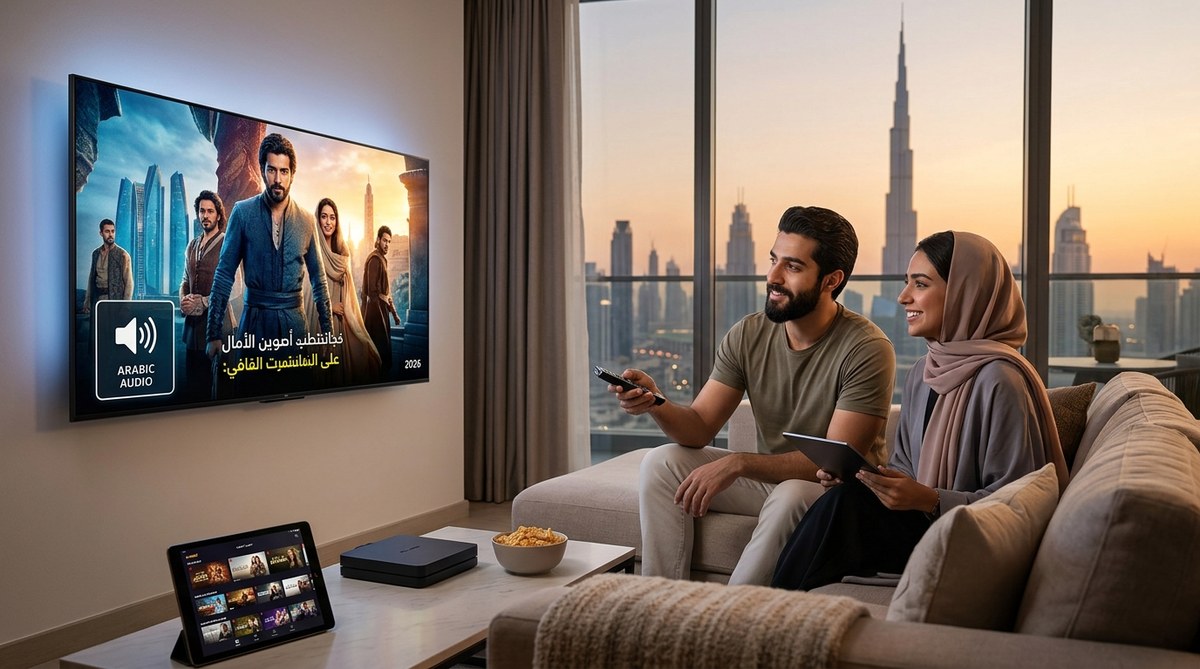
Why Arabic Dubbing Is Becoming a Must-Have for Middle East Streaming Services in 2026
If you work in streaming, you have already noticed the shift. Viewers in the Middle East are not just watching more content; they are demanding it in their own language, spoken naturally. Arabic dubbing for streaming services has moved from a niche add on to a core competitive necessity. The numbers back this up. Platforms that invest in high quality Arabic voice tracks see subscriber growth that outstrips their subtitles only competitors by a wide margin. In 2026, this is not a trend you can afford to ignore. It is the new baseline for success in the region.
Arabic dubbing is no longer optional for streaming platforms targeting the Middle East. With over 400 million Arabic speakers and a young, mobile first audience that prefers dubbing over subtitles, localized voice tracks drive retention, reduce churn, and unlock new subscriber segments. Success depends on using Modern Standard Arabic with subtle dialect touches, casting authentic regional voices, and aligning with cultural norms. Platforms that skip this investment risk losing ground to competitors like Shahid, Netflix, and OSN+ that already lead in Arabic localization.
Why Arabic dubbing exploded in 2026
The catalyst is simple: audience preference. Surveys across the GCC and North Africa consistently show that viewers under 35 prefer dubbing over subtitles when watching international series and movies. They want to relax, not read. Streaming platforms responded by pouring resources into Arabic dubbing for streaming services, and the results speak for themselves. Netflix saw double digit subscriber growth in Saudi Arabia after expanding its Arabic dubbing catalog. Shahid VIP, the region’s homegrown giant, built its entire library around localized Arabic content from day one.
Beyond preference, there is a cultural dimension. Arabic is a language of emotion and nuance. A joke that lands in English might fall flat in subtitles. A dramatic pause loses its weight. Good dubbing preserves the intention of the scene. Bad dubbing, on the other hand, drives viewers away. That is why platforms are now treating Arabic voice production with the same seriousness as the original production.
What makes Arabic dubbing different from other languages
Arabic is diglossic. The written standard (Modern Standard Arabic or MSA) differs significantly from the spoken dialects used in daily life across Cairo, Riyadh, Beirut, and Dubai. A single line of dialogue can be rendered in MSA, Egyptian Arabic, Levantine Arabic, or Gulf Arabic, and each choice changes how the audience receives it.
| Technique | Best use case | Common mistake |
|---|---|---|
| Modern Standard Arabic | News, documentaries, fantasy series, formal settings | Sounds stiff for comedy or romance |
| Egyptian Arabic | Lighthearted shows, comedies, Turkish dramas | Can feel out of place in a Gulf setting |
| Levantine Arabic | Romantic dramas, soap operas | Not understood well by Gulf viewers |
| Gulf Arabic | Local productions, reality shows, sports | Limited appeal outside the Gulf |
| Mixed dialect approach | International blockbusters with diverse characters | Inconsistent tone if not managed carefully |
The table above shows that one size does not fit all. The most successful Arabic dubbing for streaming services uses a hybrid model. They keep the base language in MSA but allow actors to flavor their delivery with a soft regional accent. This makes the dialogue feel natural without alienating viewers from other Arab countries.
How to build an Arabic dubbing workflow that works
Getting Arabic dubbing right requires more than just hiring a voice actor and a studio. Here is a practical five step process used by the best localization teams in 2026:
-
Script adaptation, not translation. A direct word for word translation sounds robotic. The script must be adapted to match Arabic sentence structure, humor, and cultural references. This step is the hardest and most important.
-
Cast based on vocal range and regional fit. Do not use the same three voice actors for every character. Build a diverse pool. For a Turkish drama set in Istanbul, you might want Levantine tones. For a Marvel movie, go with MSA with clear enunciation.
-
Record in a high quality studio with a director present. Remote recording can work, but a skilled director ensures performance consistency across sessions. The director also catches lip sync issues early.
-
Mix and master with Arabic audio standards. Arabic speech has a different frequency profile than English. The final mix should prioritize clarity of dialogue over background music.
-
Test with local focus groups before launch. Show a sample episode to a panel of target viewers. Ask them if the voices feel natural, if the jokes land, and if any cultural references feel off. Iterate based on feedback.
“The biggest mistake we see is treating Arabic dubbing as a cost center rather than a revenue driver. When we invested in a proper adaptation team and regional voice casting, our retention rate for Arabic speaking users jumped by 34 percent in six months.” – Localization director at a major streaming platform, speaking at the MENA Content Summit 2026
That blockquote captures the mindset shift needed. Arabic dubbing for streaming services is not a checkbox. It is a growth lever.
The hidden costs of ignoring Arabic dubbing
Some platforms still rely only on subtitles. They assume their English speaking expat audience is enough. That strategy is failing in 2026. The Middle East streaming market is now dominated by local and Arabic first viewers. Platforms that skip dubbing lose three key advantages:
- Higher watch time. Dubbed content gets more hours per user because viewers rewatch less and stay engaged longer.
- Better word of mouth. Families watch together. Dubbing allows multi generational viewing, which drives recommendations.
- Stronger brand loyalty. Viewers remember a platform that speaks their language. They are less likely to churn to a competitor that does not.
Compare that to subtitles only platforms. They see lower engagement among the 18 to 34 demographic, the most valuable segment for advertisers and subscription growth.
Where to find trusted partners for Arabic dubbing
The market for Arabic dubbing services has matured. Several studios in Cairo, Beirut, Dubai, and Amman now offer end to end production. When evaluating a partner, look for:
- A portfolio that includes multiple genres, not just cartoons.
- Experience with both MSA and dialect work.
- Access to a wide voice actor database across the Arab world.
- A track record of delivering on tight schedules (streaming releases are time sensitive).
If you are shopping for tech to support your streaming workflow, you might also check out our guide to the top streaming platforms in the Middle East for 2026 to see how the competition is shaping up. And for teams looking to optimize their home office or studio setup, our ultimate guide to building a gaming setup in the GCC under 5,000 AED includes tips on soundproofing and audio gear that double for voice recording.
Arabic dubbing as a competitive differentiator
The streaming wars in the Middle East are intensifying. Every platform from Netflix to Disney+ to local players like OSN+ and Starzplay is fighting for screen time. Arabic dubbing for streaming services has become the single most effective differentiator in the region. It is not about being nice to local audiences. It is about winning the market.
Look at the data from the first half of 2026. Platforms that released new seasons with Arabic dubbing saw subscriber activation rates 2.5 times higher than those that delayed dubbing or skipped it entirely. The ROI is clear.
Looking ahead: Arabic dubbing as a core strategy
If you are a streaming executive or content strategist reading this, the path forward is straightforward. Audit your current catalog. Identify the titles that perform best among Arabic speaking users. Invest in high quality dubbing for those titles first. Then expand. Build relationships with the best localization studios in the region. Treat this as a permanent part of your content supply chain.
At TBreak, we watch these trends closely. The platforms that win in 2026 and beyond will be the ones that treat Arabic not as a secondary language, but as a primary language for their global strategy. Start now. Your audience is waiting, and they want to hear you in their voice.

Post Comment