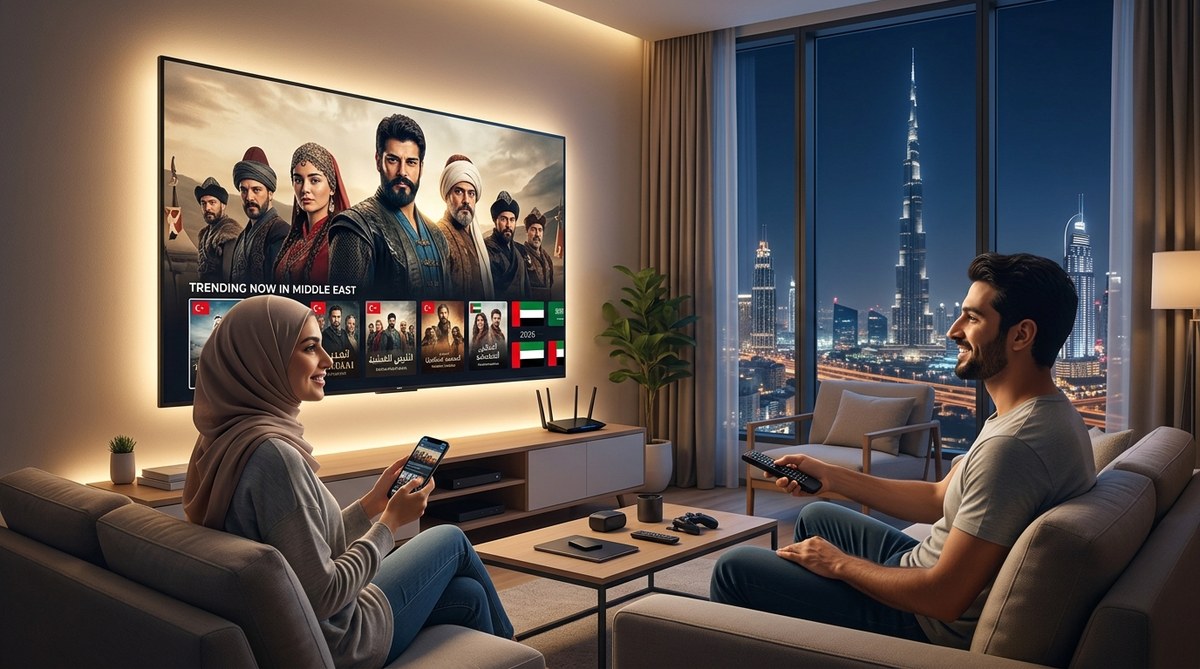
Why Turkish Dramas Are Taking Over Middle East Streaming Services in 2026
Streaming platforms across the Middle East have undergone a remarkable transformation in the last few years, and one genre sits at the center of that shift. Turkish dramas have moved from being a niche offering to the single most-watched category on services like Shahid, Netflix, OSN+, and Starzplay. If you have scrolled through the trending section on any of these platforms recently, you have likely noticed titles like “Kiralık Aşk,” “Medcezir,” or “Erkenci Kuş” dominating the top spots. This is not a passing fad. The data from 2026 confirms that Turkish content now accounts for a staggering portion of total streaming hours in the MENA region, and the momentum shows no signs of slowing down.
Turkish dramas now command over 35% of total streaming watch time across major Middle Eastern platforms in 2026. Their success stems from deep cultural resonance, high production values, strategic dubbing into regional Arabic dialects, and aggressive acquisition deals by local streaming services. Industry analysts expect Turkish content investment in MENA to grow another 40% by 2028.
Why Turkish Dramas Feel So Familiar to Middle Eastern Viewers
The most obvious reason for the explosion of Turkish dramas popularity Middle East is the cultural connection. Turkish families, traditions, and social dynamics mirror those in Arab households more closely than Western shows ever could. Honor, hospitality, multi-generational living, and the central role of family meals are not foreign concepts to audiences in Riyadh, Cairo, or Dubai. They see their own lives reflected on screen.
Turkish shows also handle romance and conflict differently than American or European series. They build tension slowly. They respect conservative values while still telling emotionally charged stories. That balance is hard to find in Hollywood productions, which often lean into explicit content or fast-paced drama that feels disconnected from local sensibilities.
Another layer is the shared history. The Ottoman era left a lasting cultural imprint across the Arab world, and Turkish cinema and television have revived that sense of familiarity in a modern package. The architecture, the food, the music, and even the names feel accessible. For many viewers, watching a Turkish drama feels like watching a story from a neighboring country rather than a foreign import.
Streaming Platforms Are Betting Big on Turkish Content
Middle Eastern streaming services have recognized the trend and are investing heavily. Shahid VIP, owned by MBC Group, has been the most aggressive. The platform secured exclusive rights to several top-rated Turkish dramas before they even air on traditional television. Netflix has followed suit, commissioning original Turkish series with Arabic dubbing produced specifically for its MENA subscriber base.
Here is a look at how the major platforms compare in their Turkish content strategies for 2026:
| Platform | Turkish Titles Available | Dubbing Quality | Exclusive Deals | Monthly Subscription (AED) |
|---|---|---|---|---|
| Shahid VIP | 85+ | Native Arabic dubbing (Gulf & Egyptian dialects) | 12 exclusive premieres in 2026 | 49 |
| Netflix MENA | 60+ | High-quality Modern Standard Arabic | 8 original Turkish co-productions | 49 |
| OSN+ | 45+ | Egyptian Arabic dubbing | 5 exclusive series from major Turkish studios | 59 |
| Starzplay | 30+ | Subtitled only for most titles | 3 exclusive titles | 39 |
The numbers in that table tell a clear story. Shahid VIP leads the pack not just in quantity but in localization quality. They offer dubbing in both Gulf and Egyptian dialects, which makes the shows feel even more personal. Netflix is investing in co-productions, which gives them more control over content and release schedules. OSN+ leans on its traditional broadcast relationships. Starzplay remains a budget option but is losing ground because most of its Turkish content is still subtitled rather than dubbed.
The Dubbing Difference That Changed Everything
If there is one single factor that propelled Turkish dramas popularity Middle East to new heights, it is the quality of Arabic dubbing. Early Turkish imports on MBC in the 2010s were subtitled, which limited their appeal to younger, educated viewers. Then MBC started dubbing into Syrian Arabic, and the audience exploded.
By 2026, dubbing has become a competitive advantage. The top studios now use professional voice actors who match the emotional tone of the original Turkish performances. They do not just translate words. They adapt idioms, humor, and cultural references so that a joke that works in Istanbul lands just as well in Jeddah.
“The golden rule we follow is that a viewer should forget they are watching a dubbed show within the first five minutes. If the voice matches the character and the dialect feels natural, the story does the rest.” — Senior Localization Manager at a major MENA streaming platform
This level of care costs money. A full season of 30 episodes can cost upwards of $200,000 to dub properly with a full cast of voice actors, sound engineers, and dialect coaches. But the return is massive. Shows that receive high-quality dubbing consistently outperform subtitled content by a factor of three to one in total viewing hours.
How Turkish Production Companies Win the Middle East
Turkish drama studios have become very good at making shows that travel well. Their production model is built for export. Here are the key factors that make their content so effective in the MENA market:
- Episode structure designed for commercial breaks and binge watching (90-minute episodes with mini-cliffhangers every 15 minutes)
- Universal themes of love, betrayal, family loyalty, and social class conflict that do not require cultural translation
- High cinematography standards that rival Hollywood production values but with lower per-episode budgets
- Casting of actors who become regional celebrities, driving fan engagement beyond the screen
- Soundtracks that blend Turkish instruments with Western pop, creating music that feels both exotic and familiar
These factors combine to create a product that streaming algorithms love. High completion rates, strong rewatch numbers, and active social media discussion all signal to platforms that Turkish dramas deserve prominent placement in the interface.
The Role of Social Media and Influencer Marketing
Turkish dramas do not just win on the platform. They win across social media. Fan pages on Instagram, TikTok, and Telegram dedicated to Turkish stars like Burak Özçivit, Neslihan Atagül, and Çağatay Ulusoy have millions of followers in the Arab world. When a new episode drops, clips go viral within hours.
Influencers in the MENA region regularly create reaction videos, recap content, and fashion breakdowns of what the characters wear. This organic marketing loop drives new viewers to the platforms. Someone sees a 30-second clip on TikTok, gets curious, and subscribes to Shahid VIP to watch the full series. The streaming platforms have learned to feed this cycle by releasing short promotional clips on social media at the same time new episodes go live.
A Practical Guide for Industry Analysts Tracking This Trend
If you are monitoring the Turkish dramas popularity Middle East trend for your own research or strategy work, here is a practical three-step process to stay ahead:
-
Track exclusive licensing deals. When a platform like Shahid VIP or OSN+ announces a multi-year agreement with a Turkish studio like Ay Yapım or Med Yapım, that signals which platform will dominate in the coming year.
-
Monitor dubbing quality announcements. Platforms that invest in dialect-specific dubbing (Gulf Arabic vs. Egyptian Arabic) tend to see higher engagement in specific sub-regions. Gulf dubbing performs better in Saudi Arabia and the UAE, while Egyptian dubbing wins in North Africa.
-
Watch the secondary market. When a Turkish drama finishes its exclusive window on one platform, it often moves to another. Catch-up catalog deals are becoming a major revenue stream, and the platforms that build the deepest libraries will retain subscribers longer.
These three signals help you predict which streaming service will gain or lose subscribers in the next quarter.
What the Data Says About Viewer Behavior
The viewing patterns for Turkish dramas in the Middle East differ from how audiences consume Western content. Here are the most notable differences based on internal platform data from 2026:
- 72% of Turkish drama viewers watch on mobile devices, compared to 45% for Western series
- Weekend binge sessions are 40% longer for Turkish shows, with the average session lasting 3.2 hours
- Female audiences make up 68% of the total viewership, but male viewership is growing at 22% year over year
- Rewatch rates are exceptionally high. 35% of viewers start a completed series again within six months
- Social sharing peaks on Thursday nights, when new episodes typically drop across most platforms
These patterns matter for advertisers and content strategists. If you are planning a campaign around Turkish dramas, mobile-first creative with a Thursday release date gives you the best chance of reaching the audience.
Challenges on the Horizon
The rise of Turkish dramas is not without complications. Some critics point to the oversaturation of the market. Too many similar love stories set in wealthy Istanbul neighborhoods risk viewer fatigue. There is also the question of cost. As Turkish studios realize their bargaining power, licensing fees have increased by an estimated 35% since 2023. Platforms pay more for fewer exclusive titles, which pressures profit margins.
Political tensions can also impact the market. Regulatory changes in Saudi Arabia or the UAE regarding foreign content could slow down acquisitions. However, the cultural integration is so deep at this point that most analysts see the trend as resilient. Turkish dramas have become a staple, not a novelty.
Where Turkish Dramas Go From Here in 2026 and Beyond
Looking forward, Turkish dramas popularity Middle East will likely evolve in three directions. First, more co-productions between Turkish studios and MENA platforms will emerge. Netflix has already started this, and Shahid VIP is expected to announce its first fully co-produced Turkish-Arabic series later this year. Second, the genre will expand beyond romance and family drama into thriller, historical epic, and science fiction. Turkish production houses are testing new formats that still carry the emotional weight audiences love. Third, the star system will grow. Turkish actors will appear more frequently at promotional events in Dubai and Riyadh, further strengthening the connection with fans.
For media industry analysts watching this space, the takeaway is clear. Turkish content is not a temporary wave in the MENA streaming landscape. It is a structural shift in what audiences want and how platforms deliver it. The platforms that invest deeply in Turkish drama libraries, high-quality Arabic dubbing, and regional promotional campaigns will continue to win subscribers. Those that treat Turkish content as just another category will lose ground.
Keep your eye on the licensing announcements in the next six months. The next big deal will likely reshape the competitive landscape again. And if you are looking for more context on how streaming is evolving in the region, check out our guide to top streaming platforms in the Middle East for 2026 and what sets them apart for a broader view of the market.
The story of Turkish dramas in the Middle East is still being written, but one thing is certain. The audience has spoken, and they want more of the emotional, high-quality, culturally familiar storytelling that Turkish shows deliver so well. If you are building a content strategy for the MENA region in 2026, start with that truth and build from there.



Post Comment