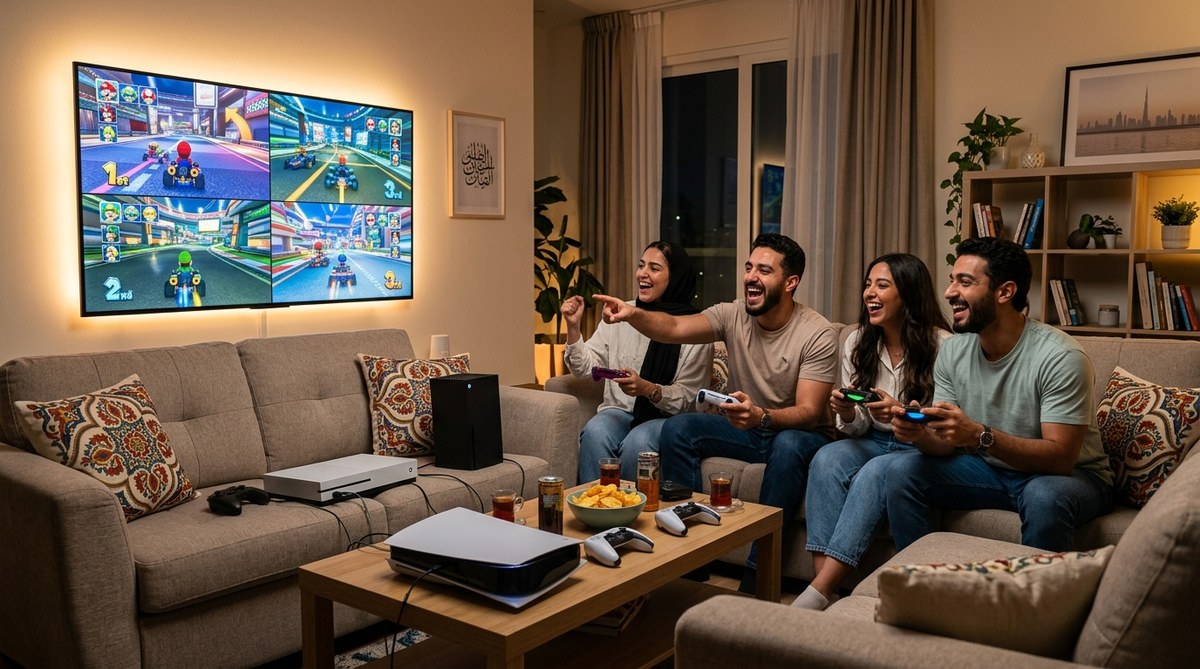
Why Local Multiplayer Games Are Making a Comeback in Middle Eastern Living Rooms
Local multiplayer games are returning to Middle Eastern homes as families and friends rediscover the joy of playing together on the same screen. Cultural values around hospitality, strong social bonds, and the region’s investment in gaming infrastructure all fuel this comeback. Titles like It Takes Two, Mario Kart, and fighting games lead the charge, proving that couch co-op fits perfectly with how people in the Middle East actually gather and connect.
The last time you sat next to a friend and passed a controller back and forth might feel like a distant memory. Online multiplayer has dominated for years, and on paper it makes sense. You can play with anyone, anywhere, at any time. No need to coordinate schedules or clean the living room. But something interesting is happening across the Middle East. Living rooms from Dubai to Riyadh, from Jeddah to Doha, are becoming gaming hubs again. Families are pulling out second controllers. Friends are gathering around a single screen instead of logging into separate sessions. The local multiplayer games comeback Middle East trend is real, and it is growing fast.
Why now? The answer is a mix of culture, technology, and timing. Middle Eastern societies place a high value on face-to-face connection. Hospitality is not just a custom. It is a core part of daily life. When guests arrive, they expect to share an experience. Food, conversation, and yes, sometimes a round of FIFA or a chaotic session of Super Smash Bros. Local multiplayer fits this cultural framework naturally. You do not need headsets. You do not need to explain voice chat etiquette. You just need a console, a second controller, and a game that supports split-screen or shared play.
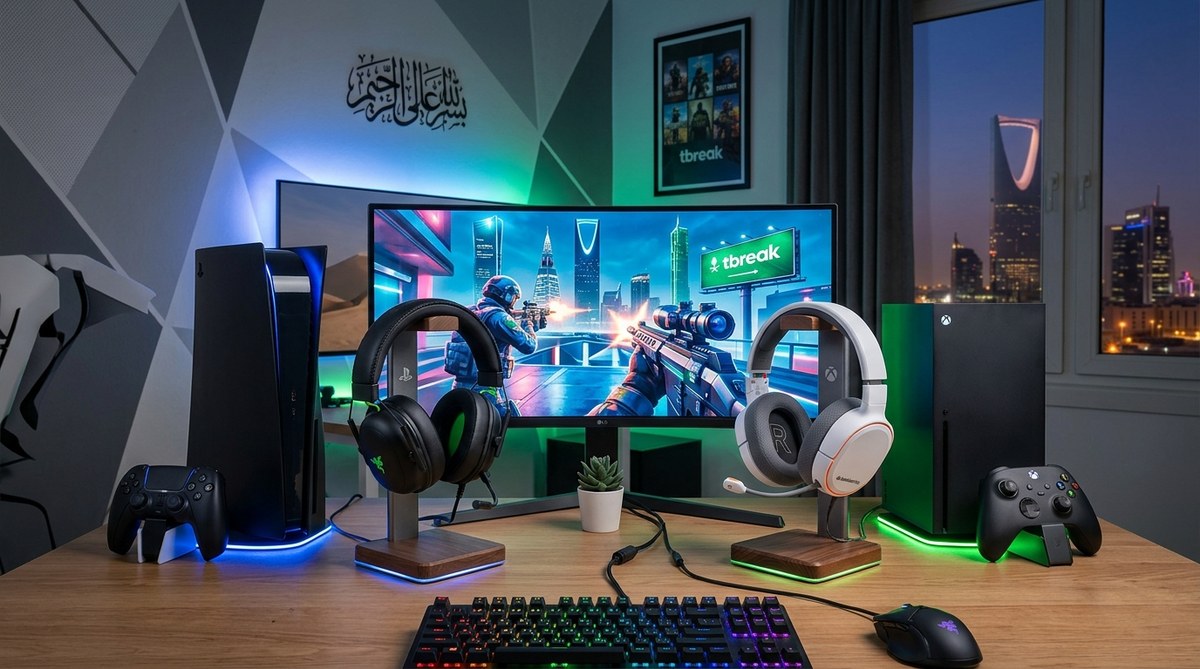
The shift is also driven by hardware. Modern consoles like the PS5 and Xbox Series X have enough power to run demanding games while maintaining split-screen functionality. This was not the case a few years ago. Many AAA developers dropped local multiplayer to push graphical fidelity and online services. But now, players are demanding it back. And developers are listening. Games like Baldur’s Gate 3, Diablo 4, and the latest Call of Duty titles include robust couch co-op modes. Indie studios have never abandoned local play. Titles like Overcooked, Cuphead, and Streets of Rage 4 prove that pixel-perfect chaos is still best enjoyed with a friend sitting right next to you.
Culture and Community Drive the Comeback
The Middle East has always been a region built on community. Large families, regular gatherings, and a love for shared experiences shape every aspect of life. Gaming is no different. In many homes, the living room doubles as a gaming space. The TV is already large. The sofa can seat five or six people. The air conditioning keeps the room cool even during the hottest months. All the ingredients for a perfect local multiplayer session are already there.
Consider the popularity of football games in the region. FIFA and eFootball have been staples for years. These games are almost always played with others in the same room. There is something about the dramatic pause before a penalty kick, the trash talk that follows a last-minute goal, and the high-fives after a win. Online matches cannot replicate that energy. The same applies to fighting games like Tekken and Street Fighter. Watching your opponent flinch in real time, seeing their hands grip the controller a little tighter, that is the magic of local multiplayer.
This cultural preference is not lost on game developers. Regional publishers and event organizers are taking notice. The success of local multiplayer tournaments at community events in Saudi Arabia and the UAE shows that people want to play together, not just against each other online. The local multiplayer games comeback Middle East is partly a response to this demand. Players want experiences that match how they actually live.
The Technical Side: Why It Works Now
Let us talk about the technical reasons behind this revival. For a long time, split-screen gaming suffered because consoles could not handle the processing load. Running two separate viewpoints at the same time requires significant GPU power. Developers chose to prioritize resolution and frame rate over local co-op. That trade-off made sense for a while. But the current generation of consoles has changed the equation.
Here is how the technical landscape has shifted:
- PS5 and Xbox Series X can run split-screen at 60fps without major compromises.
- Nintendo Switch makes local multiplayer its core identity with detachable Joy-Cons.
- PC gaming benefits from powerful GPUs that handle multiple viewports easily.
- Cloud gaming reduces the need for expensive hardware while still supporting local play.
This means more games can include split-screen without sacrificing visual quality. Developers are no longer forced to choose between local co-op and a stable frame rate. They can offer both.
“The moment we saw that the PS5 could handle split-screen at 4K we knew we had to bring local co-op back. It is what players in the Middle East told us they wanted most.”
Regional developer quote from a 2025 interview with a Dubai-based studio
The table below breaks down which game genres benefit most from local multiplayer and why they resonate with Middle Eastern audiences.
| Genre | Why It Works for Local Play | Regional Appeal |
|---|---|---|
| Sports (FIFA, NBA 2K) | Turn-based or match-based play lets everyone watch and cheer | Football is the region’s favorite sport |
| Fighting (Tekken, Street Fighter) | One-on-one, easy to pick up, intense moments | Arcade culture still strong in malls |
| Party (Mario Party, Overcooked) | Chaotic, funny, short rounds | Large groups can rotate players |
| Co-op Shooters (Borderlands, Halo) | Shared progression, teamwork required | Friends enjoy completing missions together |
| Racing (Mario Kart, Forza) | Split-screen, simple controls, competitive | Car culture is huge in the Gulf |
Five Reasons Couch Co-Op Is Thriving Right Now
Let me walk you through the specific factors driving the local multiplayer games comeback Middle East. These are not abstract trends. They are real shifts in how people buy, play, and talk about games.
-
Post-pandemic social hunger. After years of limited gatherings, people crave real connection. Sitting next to someone while gaming feels different from talking through a headset. It is warmer. It is more human.
-
The indie game explosion. Small studios never abandoned local multiplayer. Games like It Takes Two won Game of the Year awards while proving that couch co-op can be a commercial success. Indie titles are affordable and run well on almost any system.
-
Better regional internet is not the full answer. Yes, the Middle East has invested heavily in internet infrastructure. But fast internet does not replace the experience of being in the same room. In fact, good internet makes it easier to download games and play online, but many players still choose local.
-
Console sales are rising in the region. More households in Saudi Arabia and the UAE own a PS5 or Xbox Series X than ever before. Multiple controllers are common. The hardware is ready for local play.
-
Family gaming is normalized. Parents who grew up with consoles are now introducing their children to gaming. They remember playing Crash Bandicoot with siblings. They want the same for their kids. Local multiplayer bridges generations.
If you are considering building a setup for local multiplayer, here is a practical checklist to get started.
- Pick a console that supports multiple controllers out of the box (Switch or PS5 are great options).
- Choose games with dedicated local co-op modes, not just online with split-screen as an afterthought.
- Invest in a second or third controller early. It makes inviting a friend effortless.
- Set up your TV and seating so everyone has a clear view of the screen.
- Keep snacks and drinks within reach. A local multiplayer session can last hours.
How to Choose the Right Games for Your Group
Not every game is built for the couch. Some titles work brilliantly online but fall flat when played locally. Others are designed specifically for shared screens. The key is knowing what to look for.
When you browse the store or check reviews, pay attention to the “local co-op” or “split-screen” labels. Many games claim to support multiplayer but only offer online play. Do not get caught off guard. Read the fine print. Watch gameplay footage that shows two players on the same screen.
Here are some categories and recommended titles that work well for Middle Eastern households:
- Party games for all ages: Mario Kart 8 Deluxe, Super Mario Party Jamboree, and Overcooked 2.
- Competitive fighters: Tekken 8, Street Fighter 6, and Super Smash Bros. Ultimate.
- Cooperative adventures: It Takes Two, Baldur’s Gate 3, and Diablo 4.
- Sports simulations: FIFA 26, eFootball, and NBA 2K26.
Each of these titles supports local multiplayer in a meaningful way. They are not afterthoughts. The developers designed them with shared screens in mind.
The Future of Local Multiplayer in the Region
Saudi Arabia’s Vision 2030 includes massive investments in gaming and esports. The country is building a full ecosystem of developers, tournaments, and infrastructure. This will directly support the local multiplayer games comeback Middle East. When more people play games, and when the culture around gaming becomes stronger, the demand for shared experiences grows.
Events like Gamers8 in Riyadh and the Dubai Esports Festival already feature local multiplayer tournaments. These competitions attract thousands of spectators and participants. The excitement is contagious. People go home and recreate those moments with their own friends and families.
Developers are also paying attention to the Middle East as a distinct market. More games now include Arabic language support, cultural references, and region-specific content. This makes local multiplayer sessions more relatable. When a game feels like it was made for you, you want to share it with others.
We are also seeing a rise in “living room LAN” setups. Friends bring their own consoles and TVs to one house and connect them for a larger multiplayer experience. This is common in the Gulf, where homes are spacious and hospitality is generous. It is not unusual to walk into a majlis and find four TVs set up for a FIFA tournament.
How to Set Up Your Living Room for Multiplayer Gaming
If you want to host a local multiplayer session, a little planning goes a long way. The goal is to create an environment where everyone feels included and the gameplay runs smoothly.
-
Check your TV inputs. Make sure you have enough HDMI ports for the consoles you plan to use. A simple switch box can help if ports are limited.
-
Test your controllers in advance. Dead batteries or syncing issues can kill the mood. Charge everything the night before.
-
Adjust screen settings. Turn on game mode on your TV to reduce input lag. This matters most for fighting and racing games.
-
Set audio properly. If you use a soundbar or surround system, ensure the volume is balanced. Nobody wants to miss the sound cues because the bass is too high.
-
Plan the seating. Arrange chairs or cushions so everyone can see the screen without craning their necks. In a majlis setting, low seating works perfectly.
-
Prepare a rotation system. For games with more players than controllers, set a timer or match limit. This keeps things fair and gives everyone a turn.
-
Have backup games ready. If one title gets stale, switch to something else. Variety keeps the energy up.
These steps might seem simple, but they make the difference between a memorable game night and a frustrating one.
Local Multiplayer vs. Online: What the Region Prefers
There is a common assumption that younger gamers prefer online multiplayer exclusively. The data from the Middle East tells a different story. While online play is certainly popular, especially for competitive titles like Valorant and Fortnite, local multiplayer holds a special place. It is about the ritual of gathering.
Think about a typical weekend evening in a Saudi or Emirati home. Friends arrive after Isha prayer. Tea and dates are served. Conversation flows. At some point, someone suggests a game. The console turns on. Controllers are passed around. The session might last an hour or stretch past midnight. This rhythm is hard to replicate with online matchmaking.
Local multiplayer also avoids the frustration of regional server issues. Even with improved infrastructure, ping and latency can still be problems, especially when connecting to servers outside the region. Playing locally eliminates that variable entirely. The connection is instant. The experience is seamless.
For parents, local multiplayer offers peace of mind. They do not have to worry about who their child is talking to online. The interaction happens in the same room. It is supervised, social, and safe.
Many Middle Eastern gamers are also investing in gaming laptops and PCs that support local multiplayer. If you are in the market for a machine that handles both modern games and split-screen, check out our roundup of best gaming laptops under 5000 AED available in UAE and Saudi Arabia. A solid laptop can double as a console replacement when connected to a TV.
Embracing the Return of Shared Screens
The resurgence of local multiplayer in the Middle East is not a fleeting trend. It reflects something deeper about how people in the region want to connect. Technology moves fast, but the desire to share a moment with someone face to face remains constant.
If you have not hosted a local multiplayer game night yet, try it. Pick a game that everyone can enjoy. Invite a few friends over. Set up the console. Pass the controller. You might be surprised at how natural it feels. The laughter, the friendly arguments, the shared victories. That is what gaming was always meant to be.
The local multiplayer games comeback Middle East is here. The couch is ready. The controllers are charged. All you need to do is press start.

Post Comment