Mechanical Keyboards Worth Importing vs. Buying Locally in the Middle East
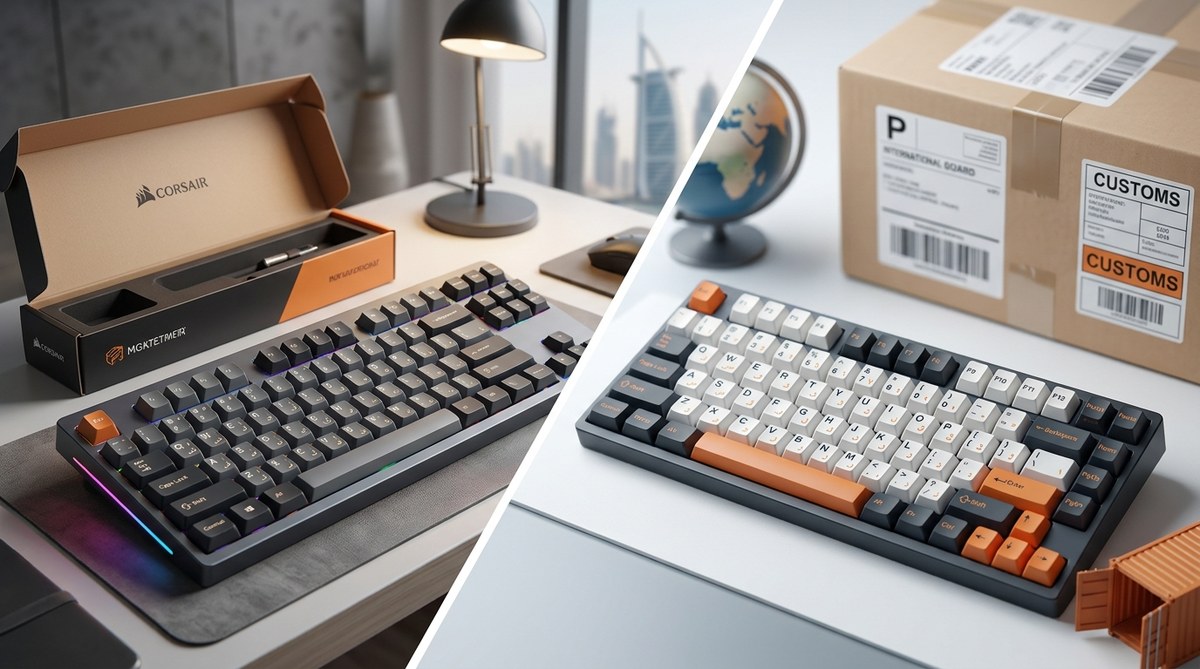
The first time you see a photo of a custom mechanical keyboard with hand-lubed switches and a colorway that matches your entire desk setup, it is hard not to want one immediately. But then reality hits. You live in Dubai, Riyadh, or Abu Dhabi. The keyboard you want is sold by a small vendor in the United States or China. The price looks great on the listing, but by the time you factor in shipping, customs, and the risk of a dead switch on arrival, that bargain starts to feel like a gamble. Meanwhile, local shops in the UAE and Saudi Arabia stock popular models like Keychron and Ducky, but the markup can be steep. So which path actually saves you money and sanity? Let’s break down the real cost of importing mechanical keyboards versus buying them locally in the Middle East.
Importing a mechanical keyboard to the Middle East can save you 20 to 40 percent on the base price, but only if you choose a reliable carrier, account for 5 percent UAE customs duty, and accept a 14-day return window at best. Buying locally costs more upfront but gives you a local warranty, no shipping stress, and faster replacement if something breaks. For your first mechanical keyboard, buy local. For your third or fourth, import the niche board you truly want.
The Real Price of Importing a Keyboard
When you see a keyboard listed for $150 on a foreign site, your brain converts that to roughly 550 AED and calls it a deal. But the final number is higher. Here is what actually happens to the price between checkout and your doorstep.
First, international shipping from the US or East Asia to the UAE or Saudi Arabia usually costs between 20 and 40 USD for a keyboard box. Carriers like DHL and FedEx are faster but more expensive. Slower options like Aramex or Asendia can save you 10 USD but add a week or two to delivery.
Second, customs. The UAE charges a 5 percent import duty on electronics valued above 1,000 AED. Saudi Arabia applies a similar rate plus a 15 percent VAT on the total including shipping. If your keyboard is declared at its full retail value, expect to pay 50 to 100 AED extra at the door.
Third, currency conversion fees. If you pay in USD or EUR with a UAE bank card, your bank adds a margin. It is usually small, but on a 600 AED purchase, it can eat another 10 to 15 AED.
Here is a simple breakdown of how a $180 keyboard lands in Dubai:
| Cost Component | Amount (AED) |
|---|---|
| Keyboard base price (180 USD) | 661 |
| International shipping (25 USD) | 92 |
| Customs duty (5% of 753 AED) | 38 |
| Bank currency fee (approx 2%) | 15 |
| Total landed cost | 806 AED |
The same keyboard sold by a local retailer in Dubai might be priced at 850 to 950 AED. The difference is not huge. And that difference is your warranty.
What Local Warranty Actually Means
If you buy a mechanical keyboard from a shop in Al Ain Centre in Dubai or a retailer like Microless or Geekay, you get a one-year warranty that works in your city. A defective switch, a loose stabilizer, or a PCB that stops registering keystrokes can be returned or exchanged within a week.
When you import, the warranty is tied to the seller’s country. Returning a faulty keyboard to a US vendor costs you another 40 to 60 USD in shipping. Some sellers will refund the board but not the return freight. Others require you to ship it back before they send a replacement. That process takes three to four weeks.
Expert advice: If you are buying your first mechanical keyboard, pay the local premium. The peace of mind of a local return policy is worth the extra 100 to 150 AED. Once you know what switches and form factors you like, then import the niche boards that local shops do not carry.
Which Keyboards Are Worth Importing
Not every keyboard is a good candidate for import. The decision depends on three factors: availability, price gap, and your tolerance for risk.
- Keychron Q series and K series: These are widely available in UAE and Saudi stores. The price gap between local and imported is usually under 15 percent. Just buy local.
- Custom builds from small US vendors: Boards from companies like Drop, NovelKeys, or KBDFans are rarely stocked in the Middle East. If you want a specific layout like a 40 percent ortholinear or a split spacebar, importing is your only option.
- High-end Japanese boards: Brands like Realforce and HHKB are almost impossible to find locally. Importing from Japan via a proxy service can double the price, but for enthusiasts, it is the only way.
- Budget hot-swap boards: If you are looking at a 50 USD mechanical keyboard from a Chinese marketplace, the shipping cost will eat any savings. Those are better bought through local discount retailers.
A Practical Process for Importing Safely
If you decide to import, follow these steps to reduce the chance of problems.
- Check the seller’s return policy before you buy. Look for a statement about international returns. If the seller does not accept returns for defective items from your region, move on.
- Use a freight forwarder with a local address. Services like Shop and Ship by Aramex give you a US or UK address. The seller ships domestically, and the forwarder handles international customs. This often lowers shipping costs and gives you tracking.
- Insure the package. For keyboards over 200 USD, the insurance fee is usually 2 to 3 percent of the value. It covers damage during transit, which is the most common issue with imported boards.
- Test the keyboard within 48 hours of arrival. Mechanical keyboards can arrive with bent pins or loose solder joints. If you wait a week to test it, the seller may deny your claim.
The Hidden Cost of Waiting
One argument for importing is that you can get a keyboard that local stores will not stock for months. But there is a hidden cost to waiting. If you order a keyboard from a US group buy, you might wait 90 to 120 days for production and shipping. In that time, your interest in the hobby might shift. You might want a different switch type or layout.
Local shops in the Middle East have improved their inventory in 2026. Stores in Dubai now stock popular models like the Keychron V1, the Ducky One 3 Mini, and several Wooting boards. If the keyboard you want is available locally, you can have it in your hands tomorrow. That immediacy has value.
When Local Beats Import Every Time
Certain situations make local buying the clear winner.
- You are on a tight budget and cannot afford a dead keyboard.
- You need the keyboard for work or study and cannot wait for a replacement.
- You are buying a gift for someone who is not a keyboard enthusiast. They will not care about the brand. They will care if it stops working.
- You want to test the feel of different switches before buying. Local stores often have display units. You can type on a Cherry MX Blue, a Gateron Yellow, and a Kailh Box White in the same visit.
If any of these describe your situation, skip the import hassle and head to a local retailer. Check out our guide on buying premium mechanical keyboards under 600 AED in Dubai for a list of stores and models.
The Middle East Keyboard Community Is Growing
The mechanical keyboard scene in the Middle East is not as small as it used to be. There are active communities on Reddit and Discord where members in Dubai, Riyadh, and Doha trade boards and share import tips. Local vendors have noticed the demand. In 2026, several UAE-based stores started offering pre-built custom boards with hot-swappable switches. That is a sign that the market is maturing.
If you are a first-time buyer, you might also want to read our guide on the best mechanical keyboards for programmers in the Middle East. It covers specific models that work well for long typing sessions and how to choose between linear and tactile switches.
Your Decision Matrix for 2026
Here is a simple decision table to help you choose.
| Your Situation | Best Move |
|---|---|
| First mechanical keyboard | Buy local |
| Specific niche board not sold locally | Import with insurance |
| Budget under 300 AED | Buy local or skip import fees |
| Willing to wait 4 to 8 weeks | Import if price gap is over 30% |
| Need a replacement fast | Buy local |
| Buying as a gift | Buy local |
| Adding a third or fourth board to a collection | Import the one you really want |
Making the Call That Feels Right
At the end of the day, the choice between importing and buying locally in the Middle East comes down to your relationship with the hobby. If you are a collector who enjoys the process of hunting for rare boards, importing is part of the fun. If you just want a reliable keyboard that feels great under your fingers, the local option saves you time and stress.
The Middle East market for mechanical keyboards is better than it was two years ago. More retailers, more stock, and better prices. But it is not yet as deep as the US or EU markets. So pick your battles. Import the board you cannot live without. Buy the board you need tomorrow from a shop down the street. And if you ever get stuck, the community is here to help you decide.


Post Comment