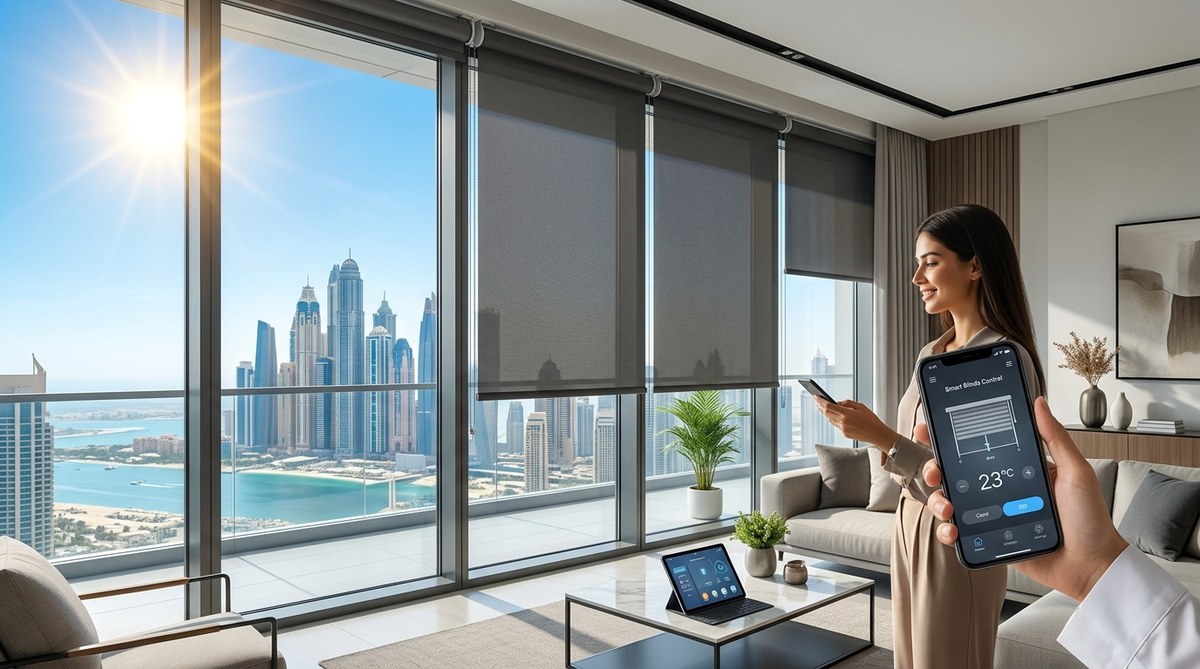
The Ultimate Guide to Smart Blinds and Curtains That Beat Dubai’s Summer Heat
Your electricity bill just jumped 40% in June, and your air conditioner runs nonstop from sunrise to sunset. The culprit? Those beautiful floor-to-ceiling windows that flood your apartment with light also turn it into an oven by noon. Window treatments aren’t just about privacy or style in Dubai. They’re essential climate control tools that can slash your cooling costs and make your home livable during the brutal summer months.
The best blinds for Dubai summer heat combine reflective materials, thermal insulation, and smart automation to block up to 99% of UV rays while reducing indoor temperatures by 5-10 degrees Celsius. Blackout roller blinds, cellular honeycomb shades, and motorized solar screens deliver the highest energy savings, with payback periods of 12-18 months through reduced AC usage in typical Dubai apartments.
Why standard curtains fail in extreme Gulf heat
Traditional fabric curtains absorb heat instead of reflecting it. That gorgeous linen drape you bought at the mall? It’s actually trapping hot air between the window and the fabric, creating a greenhouse effect that makes your room hotter.
Dubai’s summer sun hits windows at brutal angles. South-facing glass receives direct sunlight for 8-10 hours daily from May through September. Temperatures on window surfaces regularly exceed 70 degrees Celsius. Standard curtains can’t handle this thermal assault.
The physics matter here. Dark fabrics absorb up to 90% of solar radiation. Light-colored sheers look pretty but offer minimal heat protection. Neither option addresses the core problem: preventing heat from entering your living space in the first place.
Material science behind heat-blocking blinds
Reflective aluminum-backed fabrics work like mirrors for infrared radiation. They bounce heat back through the glass before it enters your room. This single feature can reduce heat gain by 45-55% compared to bare windows.
Cellular honeycomb structures trap air in pockets, creating insulation barriers. Each cell acts as a tiny thermal buffer. The best designs use double or triple cell construction, achieving R-values between 3.0 and 5.0. That’s comparable to adding an extra pane of glass to your window.
Polyester and PVC-coated fabrics resist UV degradation better than natural fibers. Cotton and linen break down within 18-24 months under constant Dubai sun exposure. Synthetic materials maintain their reflective properties for 5-7 years.
“We tested 15 different blind materials in a controlled Dubai apartment over three months. Metallized polyester with cellular construction reduced cooling costs by 34% compared to standard curtains. The investment paid for itself in 14 months.” – Energy efficiency consultant, Dubai Municipality
Top performing blind types for maximum cooling
Blackout roller blinds with aluminum backing deliver exceptional heat rejection. They create a complete barrier when fully closed. Look for fabrics rated at 1% openness or less. These block 99% of light and heat while maintaining a slim profile that works in any room.
Cellular honeycomb shades provide the best insulation value per dirham spent. Their air-trapping design works in both directions. They keep heat out in summer and retain warmth during cooler winter months. Top-down, bottom-up mounting lets you control privacy and light independently.
Solar screen roller shades offer a middle ground for rooms where you want to maintain views. Their mesh construction blocks 85-95% of heat while allowing filtered natural light. Perfect for living rooms and offices where complete darkness isn’t necessary.
Vertical blinds with reflective slats work well for sliding glass doors and large window walls. Individual vane control lets you adjust light angles throughout the day. Choose 89mm or 127mm widths for better coverage and fewer gaps.
Smart automation features worth the premium
Motorized blinds programmed to close automatically during peak sun hours eliminate human error. You forget to close blinds before leaving for work. The system doesn’t. Temperature sensors trigger closure when indoor temps rise above your set threshold.
Integration with smart home devices that work well in Middle Eastern climate conditions creates comprehensive climate management. Your blinds, thermostat, and ceiling fans work together to maintain comfort while minimizing energy waste.
Solar-powered motors eliminate wiring hassles in existing apartments. The panel charges during the day while blinds are open. Battery backup ensures operation during cloudy days or evening adjustments. Installation takes 30 minutes per window without drilling into walls.
Voice control through Alexa or Google Home adds convenience without complexity. “Close bedroom blinds” becomes part of your morning routine before temperatures spike. Schedule adjustments based on sunrise, sunset, or specific times.
Installation strategies that maximize performance
- Mount blinds as close to the glass as possible to minimize air gaps where heat can circulate.
- Extend brackets 5-10cm beyond window frames on each side to reduce light and heat leakage around edges.
- Use side channels or tracks for roller blinds to eliminate gaps where hot air infiltrates.
- Install top-down, bottom-up cellular shades to maintain privacy while allowing natural light from upper portions.
- Combine sheer solar screens with blackout blinds for flexible control throughout the day.
Proper measurement prevents costly mistakes. Measure width at three points: top, middle, and bottom. Use the smallest measurement for inside mounts. Add 10cm to each side for outside mounts that provide better coverage.
Consider professional installation for motorized systems. Wiring, programming, and sensor integration require technical knowledge. Most suppliers include installation in their pricing for automated blinds.
Cost versus savings analysis for Dubai homes
| Blind Type | Average Cost (AED per sqm) | Annual Cooling Savings | Payback Period | Lifespan |
|---|---|---|---|---|
| Blackout roller (manual) | 150-250 | 800-1,200 | 12-18 months | 5-7 years |
| Cellular honeycomb | 200-350 | 1,000-1,500 | 14-20 months | 7-10 years |
| Solar screen mesh | 180-280 | 700-1,000 | 16-24 months | 6-8 years |
| Motorized blackout | 400-600 | 1,200-1,800 | 18-28 months | 8-12 years |
| Vertical reflective | 120-200 | 600-900 | 15-22 months | 5-7 years |
A typical two-bedroom apartment in Dubai Marina with 25 square meters of window area spends approximately AED 3,500-5,000 annually on cooling. Proper window treatments reduce this by 25-35%, saving AED 875-1,750 per year.
Larger villas with extensive glass facades see even better returns. A four-bedroom villa in Arabian Ranches with 60 square meters of windows can save AED 2,500-4,000 annually. The initial investment of AED 12,000-18,000 for quality blinds throughout pays back in 3-5 years.
Common mistakes that waste money and energy
Installing blinds inside the window recess looks cleaner but reduces thermal performance. The air gap between blind and glass creates convection currents that transfer heat into your room. Outside mounts block this heat transfer pathway.
Choosing style over function costs you every month. Those bamboo blinds from the furniture store look great in photos but offer minimal heat protection. Prioritize thermal performance first, then find options that match your aesthetic.
Ignoring window orientation leads to over-spending or under-protection. West-facing windows need maximum protection from afternoon sun. North-facing windows in Dubai receive less direct heat and can use lighter solutions. Match blind specifications to actual sun exposure.
Buying cheap blinds that fail within 18 months creates false economy. The savings evaporate when you replace them twice in five years. Quality materials and construction cost more upfront but deliver better performance and longevity.
- Measure twice, order once to avoid returns and restocking fees
- Request fabric samples to test heat reflection in your actual windows
- Check warranty coverage specifically for UV degradation and motor failure
- Verify compatibility with your existing smart home ecosystem before purchasing motorized options
- Consider blackout options for bedrooms even if you prefer light in living areas
Where to buy quality blinds in Dubai and UAE
Local suppliers understand regional climate challenges better than international retailers. They stock materials designed for Gulf conditions and offer installation services familiar with Dubai building codes and apartment restrictions.
Showrooms let you see and feel materials before committing. Online photos don’t convey fabric weight, texture, or light-blocking capability. Visit at least three suppliers to compare options and pricing.
Custom fabrication costs less than you expect for standard window sizes. Off-the-shelf blinds rarely fit Dubai’s varied window dimensions perfectly. Custom orders ensure proper coverage and performance.
Timing purchases around Dubai Shopping Festival or Gitex season can save 20-30% on smart blinds and automation systems. Suppliers offer package deals combining multiple windows or rooms. Similar strategies apply when scoring tech deals during shopping festivals.
Maintenance requirements for long-term performance
Dust accumulation on blinds reduces reflective properties by up to 15%. Clean cellular shades monthly with a vacuum brush attachment. Wipe roller blinds with a microfiber cloth dampened with mild soap solution.
Check motor batteries twice yearly for solar-powered systems. Replace when charge capacity drops below 70%. Most batteries last 3-5 years with normal use.
Inspect mounting brackets annually for stress cracks or loosening. Dubai’s temperature swings cause expansion and contraction that can work screws loose over time. Tighten or replace hardware as needed.
UV exposure eventually degrades all fabrics. Watch for fading, brittleness, or pinhole development in high-exposure areas. Replace individual blinds showing significant wear rather than waiting for complete system failure.
Making your home comfortable without breaking the budget
Start with the hottest rooms first. Bedrooms and living areas where you spend the most time deserve priority. Kitchens and bathrooms generate their own heat and benefit less from premium window treatments.
Mix and match solutions based on room requirements. Motorized blackout blinds in the master bedroom, cellular shades in living areas, and basic solar screens in hallways create comprehensive coverage at varied price points.
Consider DIY installation for manual blinds to reduce costs. Most roller and cellular shades include mounting hardware and clear instructions. Save professional installation fees for complex motorized systems.
Combine window treatments with other cooling strategies for maximum impact. Blinds work better alongside proper AC maintenance, ceiling fans, and smart thermostats that save money on bills. Integrated approaches deliver better results than any single solution.
Keeping cool while staying smart about spending
Your windows don’t have to be your enemy during Dubai summers. The right blinds transform them into climate control assets that pay dividends month after month. Focus on materials that reflect heat, designs that insulate effectively, and automation that eliminates guesswork.
Start small if budget constraints exist. One properly equipped room proves the concept and builds your confidence for expanding coverage. Track your electricity bills to measure actual savings. The numbers tell the story better than any sales pitch.
Your comfort matters as much as your wallet. Sleeping better in a cool bedroom or relaxing in a living room that doesn’t feel like a sauna has real value beyond dirham savings. Choose solutions that improve your daily life while protecting your long-term investment in your home.

Post Comment