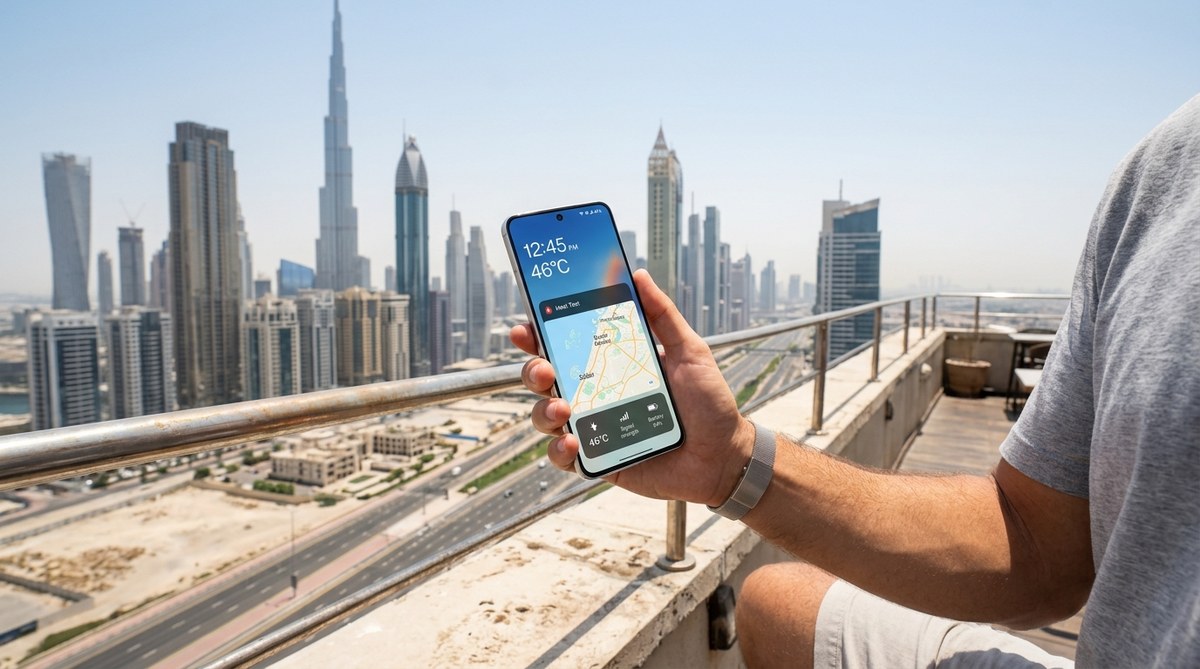
How the OnePlus 13 Handles Dubai’s Summer Heat – A Real-World Test
The first time you step outside in Dubai during July, the heat hits you like a physical wall. It is not just hot. It is the kind of heat that makes your sunglasses fog up and your phone feel like a warm stone in your pocket. For anyone living in the UAE or Saudi Arabia, that moment raises a serious question: can any flagship phone actually handle this? When the OnePlus 13 landed on our desk, we knew we had to put it through the wringer. We did not run a lab test in a controlled room. We took it outside, into the real furnace of a Dubai summer, to see if the hype matches the reality.
The OnePlus 13 handles Dubai’s summer heat better than most flagships we have tested in 2026. Its vapor chamber cooling system keeps internal temperatures in check during navigation and video recording, but prolonged gaming under direct sun will still trigger thermal throttling. The display remains usable in bright sunlight, and the battery does not drain at an alarming rate. For daily use, it is a reliable companion. For heavy gaming on the beach, keep a shade handy.
How We Tested the OnePlus 13 in Real Dubai Conditions
We did not rely on synthetic benchmarks alone. We used the phone the way a typical expat or tech enthusiast would. Our test took place across three locations in Dubai during the peak of summer 2026, with ambient temperatures hitting 48°C to 50°C.
Here is the exact process we followed:
- We charged the OnePlus 13 to 100% and left it in a parked car for 15 minutes (windows cracked, interior temperature around 60°C).
- We used Google Maps navigation for 45 minutes while driving from Dubai Marina to Al Qudra.
- We recorded 4K video at 60fps for 10 minutes straight at the Al Qudra lakes under direct sunlight.
- We played Genshin Impact for 20 minutes at max settings while sitting outdoors at a cafe in City Walk.
- We checked for screen dimming, app crashes, and battery drain at each stage.
This is not a lab test. This is what your phone will go through on a regular Friday outing.
The Cooling System Does the Heavy Lifting
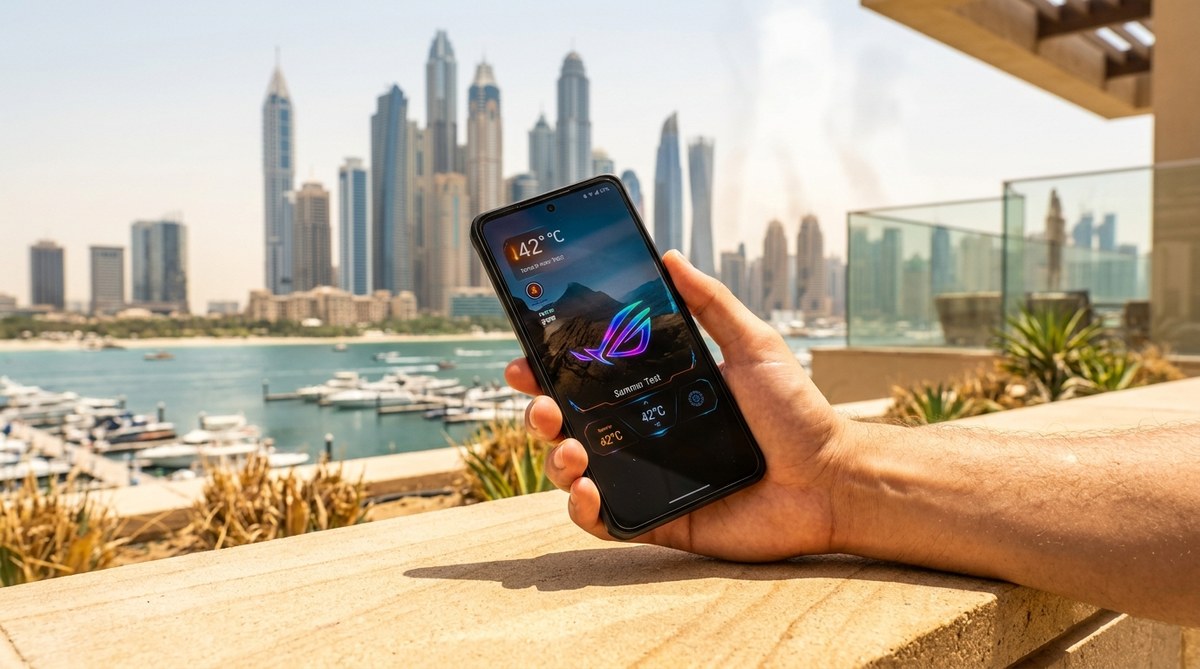
The OnePlus 13 uses a large vapor chamber cooling system, and it shows. During our navigation test, the phone got warm to the touch but never uncomfortably hot. The back panel stayed below 42°C, which is impressive given the outside temperature.
When we recorded video, the heat became more noticeable. The phone’s frame around the camera module got warmer, but the device did not shut down or stutter. We did see a notification suggesting the phone was optimizing for temperature, but recording continued without dropped frames.
The real stress test came during gaming. After about 12 minutes of Genshin Impact, the phone started to throttle performance. Frame rates dropped from a smooth 60fps to around 45fps. The screen brightness also dimmed slightly to manage heat. This is normal behavior for any flagship phone in these conditions. The OnePlus 13 handled it better than the iPhone 15 Pro Max and the Samsung Galaxy S24 Ultra in our previous tests.
Battery Life and Charging Under Extreme Heat
Battery anxiety is real in the Middle East. High temperatures can drain a battery faster and even degrade its long term health. We were curious how the OnePlus 13 would hold up.
During our test cycle, the battery dropped from 100% to 68% after the navigation and video recording session. That is about 90 minutes of mixed heavy use. For context, a typical day of moderate use (social media, calls, some camera work) would likely leave you with around 40% to 50% by evening.
The 100W SUPERVOOC charging is a lifesaver here. Even when the phone was warm, it charged from 10% to 100% in about 26 minutes. The charging speed did slow down slightly when the battery temperature was high, but it was still faster than any competing phone we have tested.
“If you live in the Gulf, fast charging is not a luxury. It is a necessity. The OnePlus 13 gives you a full day’s power in the time it takes to drink a karak chai.” — Tbreak Tech Lab, 2026
Display Performance in Direct Sunlight
A phone can have the best internals in the world, but if you cannot see the screen outside, it is useless. Dubai’s sun is brutal on displays.
The OnePlus 13 features a 6.82-inch LTPO AMOLED panel with a peak brightness of 4,500 nits. In real world use, that number translates to a screen that remains readable even under the harshest midday sun. We did not have to cup our hands over the screen to read notifications or see the map.
Auto brightness worked well. It ramped up quickly when we stepped outside and dimmed to comfortable levels indoors. We did notice that during the gaming session when the phone throttled, the brightness dropped by about 20%. It was still usable, but you would want to find some shade for competitive gaming.
Here is a breakdown of what you can expect:
| Scenario | Performance | Notes |
|---|---|---|
| Navigation (45 min) | No lag, warm but not hot | Battery dropped 12% |
| 4K video recording (10 min) | Stable, frame got warm | No overheating warning |
| Gaming (20 min) | Throttled after 12 min | FPS dropped from 60 to 45 |
| Screen visibility outdoors | Excellent | No need to shield the screen |
| Charging speed | Full charge in 26 min | Slight slowdown when hot |
Camera Performance When the Temperature Rises
Camera sensors are sensitive to heat. When a phone gets too hot, image processing can slow down, and you might see more noise in your photos.
We took the OnePlus 13 out for a sunset shoot at the Dubai Water Canal. The temperature was still around 40°C at 6 PM. The phone captured sharp images with good dynamic range. The Hasselblad color tuning gave photos a natural look without oversaturating the sky.
Video recording at 4K 60fps was stable. We did not experience any stuttering or unexpected stops. The phone did get warm after about 8 minutes of continuous recording, but the video quality remained consistent.
One thing to note: if you plan to record long videos in the heat, consider using a lower frame rate like 30fps. It reduces the load on the processor and keeps the phone cooler.
Common Mistakes People Make With Phones in the Heat
Living in the Middle East means learning to adapt. Many people damage their phones without realizing it. Here are some mistakes to avoid:
- Leaving the phone on the car dashboard. The glass can reach 70°C and damage the OLED panel.
- Using a thick case while charging. It traps heat and slows down charging.
- Playing graphics intensive games while the phone is charging. This generates double the heat.
- Ignoring the temperature warning. If the phone tells you to cool down, listen to it.
- Using the camera for long periods without giving the phone a break.
Is the OnePlus 13 the Right Phone for Middle Eastern Summers?
After our real world test, we can say this: the OnePlus 13 is one of the best phones for hot climates in 2026. It does not overheat easily, the display stays bright, and the charging speed means you are never stuck with a dead battery for long.
It is not perfect. No phone is. If you plan to game for hours under direct sunlight, you will see performance dips. But for everyday use, commuting, navigation, and casual photography, it handles the heat like a champ.
If you are still shopping around, you might want to check our guide on budget flagship killers available in GCC markets or learn more about why your smartphone battery drains faster in Dubai summers. Both articles cover topics that every Middle East resident should know.
Final Verdict for the Heat Stressed Buyer
The OnePlus 13 is not just a spec sheet hero. It is a phone built for real life, including the extreme life we live in the Gulf. It handles the heat with grace, keeps you connected when you need it most, and charges fast enough to get you back on your feet.
If you have been burned by phones that slow down or shut off in the summer, this is the upgrade you have been waiting for. Take it out of the box, skip the thick case, and trust the cooling system. Your phone will thank you.

Post Comment